Showing posts with label Autumn Glimmer. Show all posts

Thursday, September 29, 2016

Autumn Glimmer - Halloween Adventure in Ireland

Autumn Glimmer, Book Two in my Young Adult Glimmer Series, brings readers to County Wicklow's scenic woods and a fairy castle beneath an ancient Irish lake.

The Glimmer Books, which feature Ireland's mischievous fairies, are paranormal prequels to the Band of Roses Trilogy, whose "what if" premise supposes that High King Brian Boru survived the Battle of Clontarf in 1014 A.D. and established a royal dynasty still in existence. As head of state, the current King Brian upholds ancient traditions, as do his children, Princess Talty and Prince Liam. Teenager Liam stars in the Glimmer Books, along with his American friend, Janet Gleason, who can’t seem to stay away from the fairies.
In Glancing Through the Glimmer, Janet’s grandfather becomes the U.S. Ambassador to Ireland. Janet lives in Dublin and attends an upscale boarding school. She still misses Boston, especially in autumn, when New England’s trees are so gorgeous and vibrant. But she’s settled into her new life well and landed the lead in the next school play. In Autumn Glimmer, King Brian invites the Gleasons to his country estate to celebrate Halloween, Janet is happy: she’ll be with Liam again. She should know Ireland better by now…

Blurb for Autumn Glimmer: Janet and Liam meet again for a Halloween weekend they’ll never forget… Fairies living beneath the lake on the King of Ireland’s country estate? Janet Gleason isn’t surprised. The American teen and her royal friend, Prince Liam Boru, have met the Good People before. Just before Halloween, three of the fairies, Blinn, Mell, and Lewy, leave their watery home to fill a magical bag with the flowers their queen requires to keep a hungry monster asleep. Blinn decides she’d like to see the mortal king’s house. Lewy wants to taste oatcakes again, and Mell goes along on a tragic ride that leaves poor Lewy lost and alone. Can Liam and Janet help him find the flower bag before the monster awakens? Or will Lewy’s misguided glimmer trap the young mortals forever in the palace beneath the lake?

Excerpt: Below the bubble, the water brightened to lustrous cobalt blue. Stars seemed to shimmer deep in the lake. A forest of vegetation waved on the lake bed. The impossible sight of crystal towers emerged beyond the greenery, and Liam wanted to dance.

Janet raised a hand to her face. “It’s lovely, but why does it smell so bad?”

She was right. A nasty whiff of something vile had seeped into the bubble.

Becula raised her arms. “Hasten!"

The bubble’s downward speed increased. The stench intensified. Trying to pinpoint its source, Liam scanned the ghostly lake. An amber mist glowed in the inky water beyond the light and seemed to be pursuing them.

“What is it?” he asked, dreading the answer.

“The Crogall Cú,” said Becula, her nonchalant tone at odds with the stiffened sags and bags on her face. “When it hunts, its nostrils blow foul vapors to confuse its prey. Fear not, young prince. It shall not harm us.”

A terrible roar tore through the bubble. Janet yipped and clung to Liam. Squashing his lips to keep from yipping himself, he hugged her to him.

The mist billowed into to a putrid fog that poured like custard to sully the water. Another roar, much closer this time, jolted the bubble.

Janet screamed. Liam’s heart leapt into his throat. A blood-red eye as big as an autumn moon stared in at them from the water. How could such a behemoth exist in the little pond? Liam tightened his hold on Janet and hoped the Invincible Orb lived up to its name.
* * * * *
The Glimmer Books / Available in Print and eBook

Book One: Glancing Through the Glimmer
Amazon U.S.
Amazon U.K.


Book Two: Autumn Glimmer
Amazon U.S.
Amazon U.K.

Book Three: A Pot of Glimmer
Amazon U.S.
Amazon U.K.


Wednesday, November 18, 2015

Glimmering on Carpinello's Writing Pages


Young Adult Adventure with Ireland's Fairies! Award Winning author Cheryl Carpinello is graciously hosting me and the Glimmer Books today on her lovely blog, Carpinello's Writing Pages.


I thoroughly enjoyed Cheryl's interview about writing Young Adult fantasy for teens. Stop by. You'll enjoy it too, and the Fairies would love to see you!


Saturday, June 7, 2014

Ride the Fairy Wind!

The fairies of Ireland star in my young adult adventure novels, Glancing Through the Glimmer, and its sequel, Autumn Glimmer. I couldn’t have written these books without learning more about the Good Folk and their ways, and my research has led to bursting bookshelves. Most of these volumes are my own acquisitions, though some are on loan from my aunts’ incredible library of Irish lore and history, books so old the pages are falling apart. Among my favorites are the authoritative A History of Irish Fairies by Carolyn White, and Meeting the Other Crowd, a fascinating collection of eyewitness accounts of “Them” from Irish oral tradition.

Autumn Glimmer features the Fairy Wind, a supernatural phenomenon known in Irish as the Sí-gaoith (Shee-gwee-ha). According to those who understand such things, the Fairy Wind usually signals the passage of a fairy troop. In its more sinister forms, the wind delivers a grave warning to mortals trespassing on or interfering with fairy property—and it inflicts dire vengeance upon those who foolishly ignore the warning.

The Good Folk aren’t all bad, however. Sometimes the Fairy Wind serves as a gift to those who require assistance. A farmer struggling to harvest his hay might find it suddenly blown into a tidy pile, thank you very much.

Mortals have, of course, provided every account I’ve seen of the Sí-gaoith. In this brief excerpt from Autumn Glimmer, I offer the Good People’s take on the Fairy Wind. As “They” have clearly allowed me to do so, who knows? Perhaps this is how it really happens.
A breeze arose in Crooked Wood, a whistling gust that rapidly grew loud and powerful.

Blinn shouted over the racket, "Line up, boys. We’re going for a ride!"

Lewy scooted behind her; Mell took up the rear. Around them, fallen foliage whirled like tiny tornadoes, gaining in speed and number until they formed a wall of buzzing, spinning leaves.

"Whoa ho!" Mell cried as they rose in the air.

He grabbed Lewy’s waist, and Lewy grabbed Blinn’s. A sudden upward tilt forced them to sit on the firm bed of leaves. The wind took off, soaring like a magic carpet, whisking them up and over the treetops. Lewy whooped. Blinn shrieked with delight. Even Mell laughed.

Secure in Blinn’s glimmer, Lewy held tight to her willowy waist and gazed down at the water. The small oval lake glittered beneath the slanted rays of the rapidly tiring autumn sun. Shadows from the approaching storm clouds speckled the falls at the pond’s northern end.

Their bird’s-eye view revealed the remains of the crannog, submerged near the reedy eastern shore. Or was it submerged? From so high up, the ruins appeared to break through the pond’s glassy surface. An illusion, no doubt.

On the western shore, a small bog sloped from a knoll to the edge of the crystalline water. Boulders littered the southern shore, the passage by which the Daoine Linn accessed Crooked Wood every seven years. The woods glowed in the autumn light as if an invisible hand had slathered the treetops with honey and marmalade. Lewy’s mouth watered to think of such treats, but he had no time to admire the show: Blinn veered sharply east.

Thousands of years before, the mortals had cleared the land of the rubble the big ice had left behind. They built walls of stone, creating neat squares for pastures and farmland. The familiar squares still checkered the emerald landscape, and the road to the house unspooled through the patchwork. In the distance, the mist-wrapped Wicklow hills endured, standing like phantom sentinels, a bulwark between the sinister sea and the midland lakes the Daoine Linn called home.

The carpet of leaves abruptly dropped. A trapdoor opened in Lewy’s gut. He managed to keep from screaming, but Mell roared in horror.

"Hey! You could warn a guy!"

"Sorry," yelled Blinn. "It went down by itself, and I can’t get it to go back up."

"I knew it," Mell said. "You’re tired. Lewy, call up your glimmer and help her!"

Lewy scrunched his eyes and tried. Feathers of glimmer tickled him from his toes to his ears. He had to coax it, expand it fast, make it fill his chest and shoot to his fingertips, but he couldn’t remember how. Many wheels of time had spun since he’d last summoned glimmer.
The Fairy Wind bucked and plunged through the air.
* * * * *
Glancing Through the Glimmer / Available in Print and eBook
 Autumn Glimmer / Available in Print and eBook
Amazon U.S.

Amazon U.K.

Tuesday, April 8, 2014

Away With the Fairies

“In a shady nook one moonlit night a leprechaun I spied . . .”

Thanks to my family’s love of music, I learned the poem/song, The Leprechaun, when I was knee-high to a fairy. ‘Twas on an Irish record, of course, one of many recorded by the great Irish tenor, John McCormack. (Enjoy The Leprechaun in its entirety at the end of this post.)

I knew about the teensy Tinker Bell types of fairies from stories like Peter Pan and Sleeping Beauty, but the fairies of Irish folklore were always leprechauns to me. Not so, I learned while delving into the wealth of literature depicting these elusive beings. Leprechauns belong to the class of “Solitary Fairies,” which includes cluricauns, dullahans, pookas, merrows, silkies, and banshees.

Then we have the “Trooping Fairies” who party in crystal palaces beneath the Knock Ma (See Knock Moo), the hill in County Galway said to house the palace of Finvarra, the King of the Connaught Fairies. Finvarra costars in my Young Adult novel, Glancing Through the Glimmer. We didn't meet him the day we visited Knock Ma, but the local postman assured us that he and his troop were there.

It’s no surprise that these beings and the lore surrounding them have inspired many tales over the years. Glancing Through the Glimmer incorporates alternate Irish history with the magic of the Other Crowd, and it has been a joy to research.

More than once, I’ve felt inexplicable tugs toward wonderfully inspiring articles and books. I've learned that Irish lakes provide homes for water fairies, who live in underwater palaces, such as the one featured in Autumn Glimmer, the sequel to Glancing Through the Glimmer. And the leprechauns star in A Pot of Glimmer, the third book in the Glimmer series, currently in the works.


I’ve found countless web sites devoted to fairies, faeries, fae, fay, etc. During my latest visit to Ireland, I added several volumes on the Good Folk to my personal library. The public library helped my research too, but my most successful foray was into the incredible collection of Irish books my aunts have compiled over the years (See Seeking Irish Heroines.)

Every culture has fairies, whole hierarchies of them. In Ireland they aren’t the cute little Walt Disney squeakers we all know and love. Many are human-size, and all can be downright mean if one crosses them. Hair, eyes, teeth, and toenails can all fall out if we mortals distress them. (I'm in high hopes they’ve willingly joined the cast of the Glimmer Books.)

My grandmother once said that when she was a child in County Sligo (circa 1910), her father would set out a line of stones before he erected an outbuilding on their farm. If in the morning the stones were still where he’d placed them, he knew he was good to go. If not, then the fairies had disapproved of his choice, and he had to try again. Superstitious nonsense?

I’ve visited Ireland too many times to be sure, to be sure. What do you think?

The Leprechaun
(Attributed to Robert Dwyer Joyce)

In a shady nook one moonlit night,
A leprechaun I spied
In a scarlet cap and a coat of green,
A cruiskeen* by his side.
'Twas tick, tack, tick, his hammer went
Upon a tiny shoe,
And I laughed to think of a purse of gold,
But the fairy was laughing too.

With tiptoe step and beating heart,
Quite softly I drew nigh.
There was mischief in his merry face,
A twinkle in his eye.
He hammered and sang with tiny voice
And drank his mountain dew.
And I laughed to think he was caught at last,
But the fairy was laughing too.

As quick as thought I seized the elf.
"You're fairy purse!" I cried.
"The purse," he said, "is in her hand,
The lady by your side."
I turned to look, the elf was off,
And what was I to do?
Oh, I laughed to think what a fool I'd been,
And the fairy was laughing too.

* jug

Sunday, January 5, 2014

Storytelling for Actors and Monsters

Aspiring actress Janet Gleason, the teenage heroine of my young adult books, Glancing Through the Glimmer and Autumn Glimmer, has lived in Dublin since her grandfather became the U.S. Ambassador to Ireland. At first, she hated Dublin. (She really hated being kidnapped by the King of the Fairies, but that’s the first book.)

In Autumn Glimmer, Janet has settled into her new Irish school. She loves the Drama Club, and she’s learned a lot about acting. She’ll soon pick up some fabulous new techniques.

To celebrate Halloween, Janet and her grandparents visit Ireland’s royal family (hint - she likes Prince Liam). Cousin Fintan, an elderly shanachie, is also visiting to entertain everyone.

A shanachie (from the Irish seanchaí) is a traditional Irish storyteller. The ancient Celts wrote nothing down. They entrusted their laws and legends to the minds of brehons, poets, and shanachies. The shanachies told hundreds of tales from memory. And, as Janet is going to learn, some of those tales were inspired by real events.
Janet’s theatrical eye noted the arrangement of chairs before the hearth. The rough half-circle they formed gave everyone an unobstructed view of Cousin Fintan, perched on a stool beside the fireplace. His right hand held his blackthorn stick like a pole in a subway train.

He laid the blackthorn across his knees. Like a safecracker coaxing a bank vault open, he ran the tips of his long white fingers over the knobby wood. Twisting the stick toward him, he deftly reeled his audience into the story world he summoned.

"I’ll tell ye a story to shorten the night. Ye’ll scarcely believe a word I say, for I’m going back on old times, to the days when the Good People made the rounds more than they do now."
Fintan had no idea that the Good People were making the rounds that night. In fact, two were outside the open window, listening. Janet listened too, fascinated by Fintan’s tales. He painted pictures in her head no stage set could ever match.
"Long before the great ice came, giant creatures lived in Ireland. They foraged and fought and ate each other, and no man ever saw them. The ice killed all but the swimmers among them, monsters who slumbered in caves beneath the lakes until the glaciers disappeared.

"New animals came to Ireland. Men came too, and the hungry monsters leapt from the lakes and devoured them all. The heroes among the men fought back."
Fintan told the story of Gann of the Glen, a hero who helped the fairies in the lake get rid of a hungry monster.
"Gann drew his weapons. The battle fury rose in him." The blackthorn whooshed through the air as Fintan, shouting now, mimicked Gann’s swordsmanship. "With a mighty cry, he raised his sword and cut off the Crogall’s head. This he hurled away, spattering the shore with its blood. To this day, the rocks on the shores of the pond are red, and the Crogall’s bones became the jagged stones on the northern bank."
The fairies outside the window recalled a different version. The correct version. One that Janet is going to find out all about…


GLANCING THROUGH THE GLIMMER / Available in Print and eBook
Amazon U.S.

Amazon U.K.
Barnes & Noble


AUTUMN GLIMMER / Available in Print and eBook
Amazon U.S.

Amazon U.K.

Barnes & Noble


*Storytelling for Actors and Monsters originally appeared on Jester Harley's Manuscript Page

Saturday, August 6, 2011

Alaska - The Celtic Connection

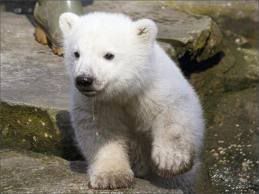
Baby Polar Bear Courtesy of Photobucket
Nearly everywhere I’ve traveled, I’ve found something Celtic to weave into the stories I write. Last month's Alaskan cruise proved a challenge in this respect. A recent Trinity College Dublin study states that ancient hanky-panky between Irish brown bears and prehistoric polar bears produced the modern polar bear. Would that do? Probably not. It wasn’t until the end of the trip that I found the Alaskan/Celtic connection I needed to enhance my work-in-progress.
Despite all the shore excursions and cruise activities, I got some work done. Stealing a block of writing time (and a Kir Royale or two) in one of the ship’s secluded spots proved no hardship. By the end of the voyage, I’d managed to draft three chapters of Autumn Glimmer, a young adult adventure set in Ireland, and the sequel to Glancing Through the Glimmer, scheduled for release this November. I’ve spent months reading mythology and archaeology books to spruce up my knowledge of water fairies, lake monsters, and crannogs, man-made islands built in lakes and rivers by prehistoric and medieval people. Fairies and monsters make sense to me. The crannogs do not.
Ten months have passed since I blogged about my visit to the Connemara Heritage and History Centre to view a reconstructed crannog. Archaeologists have dated these lake dwellings to prehistoric times. Written history tells us the Irish still inhabited them during the Elizabethan period, when they served as forts, arsenals, and hideouts. Who first built these strange abodes? And for all the toil it took to construct them, why did they bother?

Theories abound; I’ll note a few here. In Mesolithic times, impenetrable forests covered Ireland. Lakes and rivers served as the people’s highways, and they might have built crannogs as clan gathering places during seasonal festivals. Still, I can’t help wondering why the people didn’t simply fell a few trees and build houses. The idea that they venerated trees and refused to cut them down doesn’t work. They set plenty of tree trunks into the lake beds as foundations for their crannogs.

Did they live on the water because they felt the woodlands belonged to the forest gods they very likely worshiped? Or did they fear the wild boars, wolves, bears, and gigantic, lethally antlered deer who lived in the woods? Perhaps the ancients revered a sun god and had to go out on the lake to commune with him because the dense forest canopy blocked the sky. Then there’s the idea that if clearing land for cattle and crops proved more labor intensive than building crannogs, the people would consider their precious arable and pasture too valuable to waste on human habitation.

Crannogs clearly housed a wide range of social classes over the ages. In addition to weapons, sewing needles, and tradesmen’s tools, archaeologists have unearthed precious objects only the privileged classes could have afforded. The discovery of manacles suggests some crannogs served as prisons. Most experts believe pre-Celtic peoples used crannogs as storage facilities, for shelter and defense, and for platforms from which they tossed votive offerings to assuage lake gods. Some crannogs stood as single structures. Temples or shrines? Others formed entire "water towns." Why?

In my recent post describing the end of my Alaskan cruise, I mentioned a catamaran trip to Misty Fjords, a glacially carved wilderness accessible only by boat or plane. In a small inlet called God’s Pocket, the naturalist on board narrated the Native American history of the area. She also described how the mountains teemed with bald eagles, brown and black bears, moose, wolverines, river otters, black-tailed deer, mountain goats, mink, beavers, and foxes. She pointed out a rocky ledge frequently crossed by wolf packs. Spruce, hemlock, and cedar covered the steep slopes right down to the shore. No hiking trails pierced the trees, and hikers who dared to explore the region often lost their way.
Gazing out at the fiercely beautiful scenery, I sensed an odd kinship with the first crannog builders. I felt eerily safe on the tour boat, and I was only visiting the area for a few short hours. For superstitious peoples living their entire lives in such a ruggedly primitive world, a crannog must have imparted an otherworldly sense of security, a mystical, life-giving refuge whose protective waters provided food and simplified travel.

I already have my lake monster and a troop of mischievous water fairies. I think I’m good to go.