Showing posts with label Ireland. Show all posts

Saturday, January 13, 2018

An Inspiring Old Trunk

Who doesn’t love a good ghost story, especially one set in Ireland? A visit to Tubbercurry in County Sligo last summer inspired this one. It all began when my aunt, a Boston native, learned I planned to call on my cousin Michael, whom I hadn’t seen for years.

Years ago, my aunt lent a photo of her grandmother, my great-grandmother, to Michael’s mother Bridgie for inclusion in a historical publication. My great-grandmother was a schoolteacher, and the publishers wanted to feature her in a Who’s Who type section. Sadly, by the time I went over, Bridgie had passed away.

“Tell Michael I want that picture of my grandmother!” my aunt said. “Bridgie told me she put it in Grannie's old trunk!” (Grannie was Michael’s grandmother, my grandmother’s sister.)

Undaunted by family intrigue, Michael gave me a grand tour of the Tubbercurry area. We viewed the remains of the house where our grandmothers grew up, the ruins of the schoolhouse where our great-grandmother taught, and the cemetery where many family members rest. He knew nothing about the photo, though he knew about the trunk, stored in the ruins of a cottage near his childhood home.

“Look all you like,” he said when we arrived at the cottage. “But I’m telling you, my father wouldn’t touch that trunk, and neither will I.”


I'd no sooner opened the trunk when a shrieking flock of crows flew above us. The wind rose and tore off a piece of the old door. I thought it was great fun, but Michael quickly left the place and said he’d wait outside.

I never found the photo, nor did I care. The trunk had captured my imagination. I closed it up and wondered where it came from, how it got there, and what it had seen and heard. And let’s not forget the sound effects. Whether the crows and the wind were a coincidence, or whether Ireland had cast another of its spells, I had a story—if Grannie would let me use her trunk.

Apparently, she didn’t mind at all. Here’s the Blurb and an Excerpt from Unholy Crossing.

Blurb

A Spectral Stowaway Opens the Door to Ireland's Pagan Past...
It’s 1912, and America has lost its charm for Noreen Carbury, an educated young lady from Ireland. For five long years, Noreen has looked after the children of Boston’s well-to-do. Homesick and vexed by the gentry’s demeaning views toward immigrants, she schedules a voyage to visit her family in County Sligo.

Beneath the clothing and gifts she packs in her steamer trunk, Noreen conceals a wooden box whose grisly contents she’s promised to transport to Ireland. She boards a splendid new steamship expecting a crossing fit for a queen, yet her trunk has somehow harbored a spirit who plagues her during the week-long trip. She believes that once she delivers the box, the phantom will leave her alone. Although she keeps her promise, the visitations grow more sinister, pitting her strict Catholic upbringing against Ireland’s pagan past.

To protect the reputation of the man she loves, Noreen says nothing of the mysterious incidents. For decades, she bears the burden alone, until the elderly woman she becomes confesses the spine-chilling tale of the Unholy Crossing.

Excerpt
The Laconia sailed east, past the islands in Boston Harbor. Soon she would turn northeast. Toward Ireland.

Toward home.

I unlocked my cabin door and gasped at the room’s icy temperature. Annoyed that the heater had failed to perform, I eyed the button that summoned the steward. As I crossed the room to push it, I glanced at the photos on the desk and froze.

What I’m telling you now is the truth, I swear. As I gazed at the portrait of Ned and me, a golden glow rose from the top of the silver frame. A dark-haired image appeared between us.

Had I drunk more wine than I should, you ask? On my word, I did not. The woman was there, in the portrait, staring. Staring at me. Smiling.

* * * * *
Unholy Crossing - A Novella/Novelette Available in Print and eBook from

*A version of this post first appeared on The Celtic Rose

Wednesday, February 1, 2017

Imbolc & St. Brigid's Day

Newgrange
Ireland abounds with stone monuments built by prehistoric tribes to help them divide the year into seasons: Samhain, November 1, the start of winter; Beltane, May 1, the first day of summer; Lughnasa, August 1, the beginning of autumn; and, Imbolc, February 1, the glorious arrival of spring.

Carrowkeel
The Newgrange passage tomb is famous for its roof box, which allows sunlight to penetrate its interior chamber during the winter solstice. A Neolithic mound in County Sligo’s Carrowkeel cemetery has a similar box that lets light in during the summer solstice. On the Hill of Tara, sunshine illuminates the chamber inside the Mound of the Hostages on both Samhain and Imbolc.

In ancient times, spring arrived during the first week of February. Imbolc (from i mbolg, old Irish for "in the belly") refers to the impending birth of lambs and calves, a time of renewal, the start of the agricultural season. The celebration belonged to the Celtic goddess Brigid, daughter of Dagda, the Irish equivalent of Jupiter, Zeus, or Odin.

Brigid was a triple deity, a benevolent mother goddess of healing, fertility, and fire, as well as the patron of poets and smiths. When Christianity arrived in Ireland, the church superimposed its saints and holy days over many pagan deities and festivals. Brigid became St. Brigid (Bridget, Brigit, Brighid, Bride, Brid), the female patron saint of Ireland, guardian of hearth and home. Born in the 5th century, she became a leader of the early Celtic Christian church. Her feast day, February 1, is the first day of spring in modern Ireland.

Brigid, said to be the daughter of a druid, supposedly fed on the milk of Otherworld cows, a rumor that gave her dual authority over both Christian and pagan ways. A generous woman, she fed the poor and tended both cattle and land, and is often portrayed with a cow at her feet. She became a nun and founded convents and monasteries. Of the many legends associated with her, my favorite is her acquisition of the land on which she built her most famous monastery.

In 470, Brigid petitioned the King of Leinster for some prime property. Thinking himself clever, the king said he would give her as much land as her shawl could cover. Brigid took off her shawl to measure the land, giving each of the four nuns with her a corner of the cloak. The women ran north, south, east, and west, and the shawl stretched to cover acres of land. Her monastery, built near a huge oak tree, became known as Cill Dara, the Church of the Oak. Cill Dara is now the Town of Kildare.

St. Brigid’s Cross, one of the best-known symbols of Ireland, is still made from rushes on St. Brigid’s Day to ensure health and prosperity in the coming year. The practice hearkens back to Brigid’s attendance at the deathbed of a pagan chieftain, who was curious about the new Christian religion. She drew rushes from the floor and wove them into a cross, and when she told him of its origins, he converted to Christianity.

Whether goddess or saint, Brigid symbolizes the renewal of life and the hope of abundance, and Christians and pagans alike still honor her on her day.

Saturday, October 29, 2016

Brody's Banshee


Brody’s Banshee
by Pat McDermott

Some years ago, on a late autumn day, my mother asked me to accompany her to Ireland to visit her elderly parents. She said no more, except that we must waste no time. As I am a dutiful son and well versed in the ins and outs of travel, I gently guided the dear lady from Boston to Shannon on the next available flight.

Throughout the journey, she sat in silence, locked in some private distress. Black clouds greeted us on the other side of the Atlantic, though the wind-driven rain subsided as I drove our rental car south. The sun’s reappearance cheered me. My mother, however, brooded during the entire drive. After several unsuccessful attempts to learn the cause of her anguish, I resigned myself to a quiet ride.

We reached Killarney an hour later. I slowed the car to negotiate the narrow streets, taking in the colorful shop fronts and horse-drawn carriages. Then I drove on to the house my mother left when she married my father thirty years earlier.

The family homestead sat in solitary splendor on ten County Kerry acres. A circular driveway took us past well-landscaped grounds to the front door. Despite the lovely setting, My mother stared at the dwelling with unmistakable dread.

My nimble grandmother greeted us with her customary warmth, yet her lilting accent held no cheer. The pleasant aroma of pipe tobacco announced my grandfather’s presence. Sure enough, the old fellow emerged from his study and greeted us with hefty hugs, adding an arm-wrenching handshake for me. He didn’t seem to notice my grandmother’s solemn demeanor.

“Come in, Nora!” he bellowed. “Come in, Brody! Get those coats off and we’ll have tea!”

My mother’s eyes glistened; her lip trembled. I had lost patience with her reticence and resolved to learn what was afoot if I had to bully it out of her.

“Right after we settle in, Pa,” I said.

Hefting our luggage, I led my mother upstairs. As always, she claimed her childhood bedroom. I set her bag on a chair. “What’s happening here, Mum?”

She closed the door. “I didn’t want to tell you before, Brody. You wouldn’t have believed me, and I couldn’t bear your teasing.”

“I won’t tease you. I’m listening.”

She held her breath before she continued. “Your grandmother heard the banshee.”

I didn’t tease, but I couldn’t keep my eyebrows down. “Has she? What about Pa?”

“He hasn’t heard it. The one the banshee cries for never hears it. I know you don’t believe it, Brody, but I’m afraid for my father.”

I thought of the burly man downstairs and smiled. Even at his advanced age, he was stronger than most men I knew, including me. “You’re worrying for nothing. Let me put my bag away and we’ll go down for tea.”

I chose my favorite guest room, a small but well appointed suite that overlooked the front entrance and afforded spectacular views of the gardens. Pulling the red velvet curtain aside, I enjoyed the scenery until the rain abruptly returned in raging torrents. The wind howled and moaned, as it would in such an open area. I understood why my grandmother believed she had heard a banshee.

According to legend, the eerie wailing of these spectral females supposedly heralds death. My mother often said she had heard one the night my father died. Such superstitions—peculiar weather omens, outlandish remedies, and charms that guaranteed spouses and wealth—had always amused me. My mother, however, believed in such things. On her kitchen wall, a horseshoe still hangs “points up” to keep the luck from running out, for all the good it has ever done her.

My own beliefs were centered in science. After earning a business degree, I joined a high tech firm and traveled often to visit its worldwide branches. My level-headed logic would help calm the ladies’ fears during this gloomy visit. I released the curtain and went downstairs.

In Ireland, they call supper “tea.” The housekeeper had set out the simple meal in the dining room, where a gas fire danced in an ornate hearth. We chatted our way through scones, salad, ham, and potatoes. My grandmother had just called for dessert when a loud knock sounded at the front door.

The women froze. Pa, however, seemed oblivious to the rapping. He continued telling a favorite story of his boyhood. As I had heard the tale often, I permitted my attention to drift. Why would someone use the knocker rather than the doorbell? When the housekeeper failed to answer the knock—no doubt she couldn’t hear it from the kitchen—I set my napkin on the table, strolled down the hall, and opened the door.

No one was there. I returned to the dining room and stated my opinion that the wind had caused the rapping.

Pa was lighting his after-dinner pipe. Through his initial puffs, he said, “That’s what I think, Brody. We old folks don’t hear so well anymore, and the wind plays tricks on your grandmother.”

He resumed his tale. His old briar pipe was well-fired now. He held it by the bowl, waving it to emphasize the key points of his story. Outside, the wind still howled.

Without warning, the howling rose to a ghastly shriek that burst into pitiful, piercing cries. The women grew pale, but Pa continued his narrative, clearly deaf to the paranormal screams that gripped his wife and daughter in breathless horror. I must confess that an unknown terror chilled me as well.

The hideous lamenting ceased just as Pa concluded his yarn. He chided the women for fearing the wind and weather. Soon we all rose and retired for the night. Despite the mysterious keening—whatever it was, I doubted any supernatural visitation had occurred—jet lag had left me exhausted. I fell straight to sleep.

Several hours later, I awakened to the clip-clop of horses and the rumbling of a rolling carriage. The bedside clock read three a.m. Who would be coming at this hour in a horse-drawn cart? I stole to the window and pulled back the velvet curtain.

Outside the front door, not one, but two horses stomped the ground before an old-fashioned carriage set on high wheels. A coachman in antique attire sat in the driver’s seat. The brim of his top hat hid his face. Thinking that the window glass might be distorting whatever was really down there, I lifted the sash. Cold air blew away the last remnants of sleep. I decided I was witnessing a costume drama.

I watched spellbound as two men attired like the coachman carried a shapeless black mass from the house. The carriage door opened. With calm efficiency, they hauled their burden inside.

The door snapped shut. The coachman cracked his whip and shook the reins. He glanced up. Our eyes met. His skeletal face contorted into a hideous, mocking smile. He touched his whip to the brim of his hat and cried, “Come aboard, sir! There’s plenty of room!”

Too shocked to speak, I made no response. He let go a high-pitched titter and drove off into the starless mist.


I paced my shadowy room until I convinced myself that I had experienced a nightmare. The lingering horror crumbled away. I found my bed and fell into a dreamless sleep.

Just past nine o’clock, I prepared for the day and went downstairs. The sound of strange voices surprised me. In the kitchen, my weeping mother and grandmother sat with uniformed emergency personnel whose calm demeanor belied any emergency.

My mother stood and hugged me. “Your grandfather is gone, Brody. He died in his sleep and suffered no pain.”

I didn’t believe it. “Why didn’t anyone call me?”

I raced up the back stairs to my grandparents’ room, where doctor and priest conversed in low tones. The shell of my grandfather lay on the bed, his hands folded on his chest, his forehead glistening with the holy unction of last rites. I knew then that a death coach had stolen away my precious Pa.

For months, the events of that night haunted me. I never mentioned the costumed coachmen. My level-headed logic eventually convinced me that some trick of the imagination had deceived me, that the death coach had been a dream after all.

A year later, I was in Boston when the news came that my grandmother had followed my grandfather to eternal rest. No wailing banshee accompanied her passing, at least not on this side of the ocean, and not because the banshee couldn’t cross the sea. I convinced myself that the banshee only existed at all because legend and the mysterious Irish landscape had joined forces to plant her in generations of imaginations.

Twenty years have passed. I am president of my own electronics company now. A year ago, I established a division in Dublin. After several transatlantic trips to oversee the startup of my new branch, I visited Ireland’s capital to attend the theater festival.

A howling, wind-driven rain greeted me when I arrived at Dublin Airport that autumn afternoon. I had a flat in the city center and carried only an overnight bag. I waited at the stop for the Dublin shuttle. The minibus pulled up. The door opened, and the passengers shifted politely to make space for me.
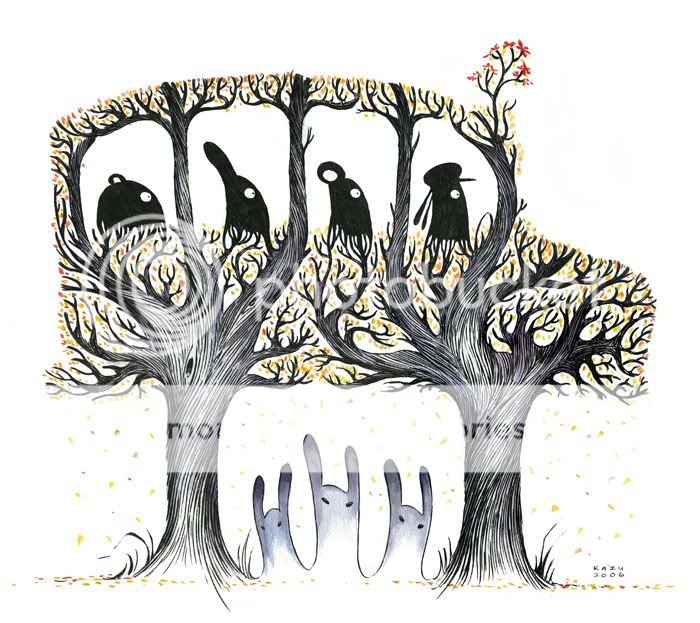
“Come aboard, sir!” called the driver. “There’s plenty of room!”

My half-raised foot stopped in midair. I looked into the same eyes I had seen in Kerry twenty years before. The same skeletal face with its hideous, mocking smile stared back at me, as it had then.

“Thank you,” I said. “I’ll wait for the next one.”

Was I the only one who had heard his high-pitched titter?

Transfixed, I watched the shuttle drive away. It stopped before turning out of the airport and onto the main road. Just as it pulled out, a speeding fuel truck slammed into it. Both vehicles burst into flames.

No one survived.
* * * * *
Happy Halloween,
Pat
 

(Brody's Banshee is loosely based on an old story by the late Shane Leslie. Pictures courtesy of Photobucket.)

Thursday, September 29, 2016

Autumn Glimmer - Halloween Adventure in Ireland

Autumn Glimmer, Book Two in my Young Adult Glimmer Series, brings readers to County Wicklow's scenic woods and a fairy castle beneath an ancient Irish lake.

The Glimmer Books, which feature Ireland's mischievous fairies, are paranormal prequels to the Band of Roses Trilogy, whose "what if" premise supposes that High King Brian Boru survived the Battle of Clontarf in 1014 A.D. and established a royal dynasty still in existence. As head of state, the current King Brian upholds ancient traditions, as do his children, Princess Talty and Prince Liam. Teenager Liam stars in the Glimmer Books, along with his American friend, Janet Gleason, who can’t seem to stay away from the fairies.
In Glancing Through the Glimmer, Janet’s grandfather becomes the U.S. Ambassador to Ireland. Janet lives in Dublin and attends an upscale boarding school. She still misses Boston, especially in autumn, when New England’s trees are so gorgeous and vibrant. But she’s settled into her new life well and landed the lead in the next school play. In Autumn Glimmer, King Brian invites the Gleasons to his country estate to celebrate Halloween, Janet is happy: she’ll be with Liam again. She should know Ireland better by now…

Blurb for Autumn Glimmer: Janet and Liam meet again for a Halloween weekend they’ll never forget… Fairies living beneath the lake on the King of Ireland’s country estate? Janet Gleason isn’t surprised. The American teen and her royal friend, Prince Liam Boru, have met the Good People before. Just before Halloween, three of the fairies, Blinn, Mell, and Lewy, leave their watery home to fill a magical bag with the flowers their queen requires to keep a hungry monster asleep. Blinn decides she’d like to see the mortal king’s house. Lewy wants to taste oatcakes again, and Mell goes along on a tragic ride that leaves poor Lewy lost and alone. Can Liam and Janet help him find the flower bag before the monster awakens? Or will Lewy’s misguided glimmer trap the young mortals forever in the palace beneath the lake?

Excerpt: Below the bubble, the water brightened to lustrous cobalt blue. Stars seemed to shimmer deep in the lake. A forest of vegetation waved on the lake bed. The impossible sight of crystal towers emerged beyond the greenery, and Liam wanted to dance.

Janet raised a hand to her face. “It’s lovely, but why does it smell so bad?”

She was right. A nasty whiff of something vile had seeped into the bubble.

Becula raised her arms. “Hasten!"

The bubble’s downward speed increased. The stench intensified. Trying to pinpoint its source, Liam scanned the ghostly lake. An amber mist glowed in the inky water beyond the light and seemed to be pursuing them.

“What is it?” he asked, dreading the answer.

“The Crogall Cú,” said Becula, her nonchalant tone at odds with the stiffened sags and bags on her face. “When it hunts, its nostrils blow foul vapors to confuse its prey. Fear not, young prince. It shall not harm us.”

A terrible roar tore through the bubble. Janet yipped and clung to Liam. Squashing his lips to keep from yipping himself, he hugged her to him.

The mist billowed into to a putrid fog that poured like custard to sully the water. Another roar, much closer this time, jolted the bubble.

Janet screamed. Liam’s heart leapt into his throat. A blood-red eye as big as an autumn moon stared in at them from the water. How could such a behemoth exist in the little pond? Liam tightened his hold on Janet and hoped the Invincible Orb lived up to its name.
* * * * *
The Glimmer Books / Available in Print and eBook

Book One: Glancing Through the Glimmer
Amazon U.S.
Amazon U.K.


Book Two: Autumn Glimmer
Amazon U.S.
Amazon U.K.

Book Three: A Pot of Glimmer
Amazon U.S.
Amazon U.K.


Saturday, February 6, 2016

New Release - Unholy Crossing

A spectral stowaway opens the door to Ireland's pagan past...

So reads the tagline for my new novella/novelette, Unholy Crossing, a ghost story nestled into a tale of emigration and homecoming. Sincere thanks to cover artist Nika Dixon, who has produced another masterpiece for my characters and me. Here's the Blurb:
* * * * *
“I bought the trunk in Boston to prepare for a visit home…”

It’s 1912, and America has lost its charm for Noreen Carbury, an educated young lady from Ireland. For five long years, Noreen has looked after the children of Boston’s well-to-do. Homesick and vexed by the gentry’s demeaning views toward immigrants, she schedules a voyage to visit her family in County Sligo.

Beneath the clothing and gifts she packs in her steamer trunk, Noreen conceals a wooden box whose grisly contents she’s promised to transport to Ireland. She boards a splendid new steamship expecting a crossing fit for a queen, yet her trunk has somehow harbored a spirit who plagues her during the week-long trip. She believes that once she delivers the box, the phantom will leave her alone. Although she keeps her promise, the visitations grow more sinister, pitting her strict Catholic upbringing against Ireland’s pagan past.

To protect the reputation of the man she loves, Noreen says nothing of the mysterious incidents. For decades, she bears the burden alone, until the elderly woman she becomes confesses the spine-chilling tale of the Unholy Crossing.

Wednesday, November 18, 2015

Glimmering on Carpinello's Writing Pages


Young Adult Adventure with Ireland's Fairies! Award Winning author Cheryl Carpinello is graciously hosting me and the Glimmer Books today on her lovely blog, Carpinello's Writing Pages.


I thoroughly enjoyed Cheryl's interview about writing Young Adult fantasy for teens. Stop by. You'll enjoy it too, and the Fairies would love to see you!


Friday, June 5, 2015

New Release! A Pot of Glimmer


A Pot of Glimmer
, Book Three in the Glimmer Series, is now available in both Print and eBook. As with the first two books in the series, Glancing Through the Glimmer and Autumn Glimmer, the story is set in Ireland and features Ireland's mischievous fairies. Adventure for Young Adults of All Ages!
* * * * *
A leprechaun’s feud with a Viking ghoul puts Janet and Liam in deadly danger…

 Ireland, January 1014
- Fledgling leprechaun Awley O'Hay leads a raid on a Dublin mint. The mission: steal a shipment of coins to aid the High King, Brian Boru, in his war against the Vikings. Awley and his team plan the heist with commando precision, but they hit a glitch and only escape a bloodthirsty mob with the help of Hazel, the uncommon sister of one of the leprechauns. Yet the money master's vengeful ghost troubles Awley for centuries. So do Awley's forbidden feelings for Hazel.

Ireland, July 2015 - Janet Gleason has had her fill of fairies. They've not only plagued the American teen since she arrived in Dublin, they've also damaged her romance with her gallant friend, Prince Liam Boru. When Janet's grandfather, the U.S. Ambassador to Ireland, throws a Fourth of July celebration, Liam reluctantly attends with the rest of the royal family.

Also attending are several uninvited guests. A fairy witch named Becula arrives with Hazel, her clever and quirky protégée, to beg a favor of Janet. The unplanned appearance of Awley O'Hay and his leprechaun pals triggers a chilling visit from Awley's ancient enemy, now an undead monster hungry for human flesh.

Liam and Janet fall into a nightmare that tests their courage in ways they never imagined. Nor did they imagine that real leprechauns are nothing like the "little men" of Irish lore.
* * * * *

Sunday, November 23, 2014

The Band of Roses Trilogy - Adventure and Romance in Ireland

April 23, 2014 marks the 1000-year anniversary of Ireland's bloody Battle of Clontarf. On Good Friday in 1014 A.D., the armies of High King Brian Boru challenged a host of Vikings and their allies on the plains of Clontarf, north of Dublin. Though Brian’s troops were victorious, he was murdered by fleeing Vikings as he prayed in his tent.

Many historians have speculated that Ireland would be a different place today if King Brian had survived the Battle of Clontarf. The Band of Roses Trilogy, a romantic action/adventure series set in modern Ireland, supposes he did survive and established a royal dynasty that still rules the Emerald Isle. The current King Brian upholds ancient traditions, as does his daughter, Crown Princess Talty, though Talty has a knack for landing in trouble. She wishes she were anyone but the heir to her father's throne—and she learns to be careful what she wishes for.


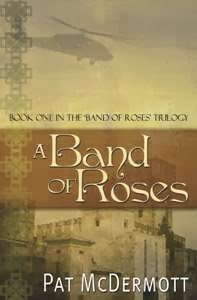
In Book One, A Band of Roses, Talty must hide her identity to outwit assassins, but she can't hide her ingrained training as a warrior sworn to protect her homeland. From Japan to California to an eleventh century Ireland, she finds romance and adventure, yet all she wants is to return to her family and Neil Boru, the adoptive cousin she secretly loves and cannot have—or so she thinks.

In the second book, Fiery Roses, the discovery of offshore gas ensnares the Boru clan in a web of blackmail and murder. When the residents of rural County Mayo object to pipelines on their land, an arsonist tries to change their minds. One of his fires sends newlyweds Talty and Neil to an ancient world at the mercy of a waking volcano, where they must fight not only to survive, but to save their fledgling marriage.

Book Three, Salty Roses, finds the dynamic princess believing her days of adventure are over. Her royal duties seem endless, and a day off with Neil is looking good. The royal couple accepts an invitation for a jaunt aboard a luxury submarine. As they view an eerie shipwreck, an unknown enemy lures them to an ancient tomb and sends them to a world infested with treacherous pirates. Talty takes charge of a pirate ship and its mangy crew, while Neil matches wits with a temptress who jeopardizes his wedding vows.

In this Excerpt from A Band of Roses, a military assignment teams Talty with her 'Veddy' English commanding officer, Richard Gale, who knows her as Major Christy McKenna. In an experiment gone wrong, they arrive in our world in 1014 A.D., just before the Battle of Clontarf. They've met a lady named Leesha, whose handsome son Gayth has his eye on Talty. In this scene, Gayth is leading his Dalcassian clan to aid King Brian in his fight against the Vikings—but Gayth has more than warfare on his mind.
* * * * *
For three rainy days, the Dalcassians rode two hundred strong. On the third day, Gayth called a stop to rest. Talty and Richard tethered their horses and made their separate camp. While Richard prepared a fire pit, Talty rummaged beneath the shrubbery to find dry wood.

“Can’t we cheat and use matches, Richard? I’m tired of being cold and wet.”

“So am I.” Richard poked through his toolkit until he found the waterproof matchbox. When the fire was burning well, they finished the last of their oatcakes and ale.

“So here I am, the protector of a holy woman. Who knew?”

Talty winced. She regretted agreeing to the deception. Gayth had told the men her presence would protect them. “I wish Leesha hadn’t started this. I’m not some saint who can heal battle wounds with a touch.”

“They don’t know that, darling. We have an edge as long as they think you’re no ordinary woman. Why did she say that, anyway?”

“She was afraid I’d spirit Gayth away to fairyland. She needn’t have worried, though. He seems able to resist me just fine.”

“Perhaps you married too young to learn how devious men can be. Our friend Gayth isn’t finished with you, holy woman.”

Gayth stepped from the darkness. “My kinsmen are grateful for your fire. The furze is too wet to burn. They invite you to join them in a game of spear fishing, Richard. There’s salmon nearby, and we need the food as well as the sport.”

“I’m reluctant to leave Christy alone.”

Talty bristled at Richard’s protectiveness. “You should get to know the men. I’ll be safe enough at my prayers.”

Gayth’s chocolate eyes sparkled in the firelight. “I will stay and protect you while you pray.”

Still smiling, Richard found a spear and went off to fish. Though Talty had encouraged him to go, his abandonment annoyed her. “I’m going to pray beside the pond. It could be a watering hole for game.”

“You hunt game, holy woman?”

“Even holy women must eat.” She left him by the fire and was soon scanning the ground at the edge of the pond. The twilight’s glow revealed animal tracks in the rain-damp soil. She walked toward a dense stand of trees, not quite sorry that Gayth and his sparkling eyes had caught up.

“Did you see any tracks?” he asked.

“Yes. Deer, I think. Smaller game as well, and I’m sure I heard waterfowl a while ago.”

“I like roast goose. Can you pray for some?”

Silently groaning, she studied the sky. “Do we have time to roast meat?”

“The men must eat. Once we’ve rested and refilled our food sacks, we’ll ride again. We should reach Dublin in three, maybe four days’ time.”

“What day is this?”

“Monday of Holy Week. What holy woman wouldn’t know that?”

Barely aware of his teasing tone, she supposed they could reach Dublin by Good Friday, though that would be cutting it close. Yet in this world, the Battle of Clontarf might not take place on Good Friday. Perhaps no battle would occur at all. Perplexed, she stole into the trees.

Gayth followed her.

“This will make a fine blind.” She spoke more to herself than to Gayth.

“You intend to wait here for deer? Praying?”

Ignoring him, she returned to the fire to bank the embers and fetch the Viking bow.

Gayth was right beside her.

She slung the quiver and arrows over her shoulder. Her hooded cloak went on next to protect both her and the bow from the weather.

Her preparations seemed to mystify Gayth. “Why don’t you simply rush the herd and cast a spear when they bolt?”

“This way I’ll get the deer I want, not one who falls behind because it’s old or sick.”

“I’ll come with you.”

“I need silence.”

“Yes, I know. To pray. I promise to be quiet.”

They stood in the natural blind together and watched the water’s edge. She didn’t resist when he pulled her against him.

“Lean on me, lady,” he whispered. “Rest a little.”

He wrapped his cloak around her. She leaned against him, breathing in smoke and sweat, banishing all thought until a small herd of deer appeared to investigate the clearing. Though tempted to forget them, she broke away from Gayth and uncovered her bow. Silence was critical now.

He caught her face in his hands and kissed her well. After the briefest pause, she kissed him back, grateful for the fading light that hid her burning cheeks. Then she nudged him away. The deer wouldn’t tarry long.

Kiyoshi’s words flowed back to her: See the target as a reflection of your mind, as a mirror. Your mind will find the target.

Gayth stepped back. Talty fixed on the biggest doe in the herd. She drew without breathing, released, and held her position until the arrow pierced the doe’s side.

Shot clean through, the doe hovered over the ground for the briefest moment before collapsing in a motion so natural, the other deer failed to notice. The arrow’s strange whoosh had alarmed them, however. They scattered into the forest.

Pleased with her success, Talty lowered her bow. The kiss that lingered on her lips unexpectedly angered her. “Why are you here, Gayth? You ran from me before.”

“I ran from a holy woman. Your warrior skills bestir most unholy thoughts in me.”
* * * * *
Thanks for reading!
Pat
Pat’s Website

(This post originally appeared on The Celtic Rose)

Monday, July 14, 2014

Children in Adult Stories

Blackmail and murder hardly make Fiery Roses a story for children. Yet a few vibrant moppets have stolen their way into this action/adventure fantasy set in an Ireland that might have been. Why include children in an adult story?

A child’s perspective can ease the tension, offer a simpler point of view, or add a touch of humor as it furthers the story along. In this excerpt, two girls amuse a reporter.

The sight of two red-haired demons bicycling straight at her frightened her until she realized the skinny legs pumping the pedals belonged to freckle-faced Mary Margaret Gannon and her sister Joanie.

"Allison! Allison!" Little Joanie skidded to a halt, braking with the toes of her sneakers. "An old, old man is visiting Aunt Betty. He must be a hunnerd-an-ten!"

Mary Margaret backpedaled to a stop. "He came to see her garden." Holding the handlebars, she straddled her bicycle and sighed. "He said none of the flowers in her garden was as beautiful as her, and then he kissed her hand."

"He’s going to court her," squealed Joanie. "Wait till we tell Daddy!"


No secrets with kids around. Then we have the adult character who flashes back to childhood. I used this trick to help readers understand Neil Boru, the adoptive cousin and newlywed husband of Princess Talty. Here, he shares a haunting memory of his first meeting with his grandmother.

"‘Come here, boy’, she said. ‘Let me look at you.’ My mother gave me a nudge, and I went and stood in front of Bridget." His eyes shut tight at the recollection. "I thought she was a witch, Tal. I can still see her weird purple eyes staring at me, never blinking. Then she said, ‘You look nothing like my Frank.’ She only spoke to my mother after that. While we were having tea, she said, ‘He’s left-handed. That’s no good,’ and other equally endearing things."

Fiery Roses takes Neil and Talty to a parallel world, where they meet Kavie, a darling eight-year-old who gives Talty a chance to demonstrate her archery skills.

Kavie stood with his back to the sun, shooting arrows into, or at least near, a moth-eaten hide thirty yards in front of him. Pieces of straw peeked from beneath the target, an old boarskin shaped to somewhat resemble the unfortunate boar who had once owned it.

Smiling at his comical lack of skill, she waited until he reached for an arrow before she spoke. "Hello, Kavie. You’re up early. Practicing your shots, are you?"

"Good morning, goddess," he said in his squeaky but endearing young voice. "I’m going to be a great hunter, like Papa."

"That will take lots of practice and hard work."

"I don’t mind." He stood tall. "I’m small, but I’m very brave."


Kavie will have a chance to prove his bravery, as will little Joanie, and yes, even Neil. The children’s presence undeniably enriches the plot of Fiery Roses. I’m glad they insisted on jumping aboard.

* * * * *

Fiery Roses, Book Two in the Band of Roses Trilogy, is available in print and eBook on Amazon, as are Book One, A Band of Roses, and Book Three, Salty Roses. Additional excerpts are available on my website.


*This post originally appeared on Jester Harley's Manuscript Page, August 30, 2012

Saturday, June 7, 2014

Ride the Fairy Wind!

The fairies of Ireland star in my young adult adventure novels, Glancing Through the Glimmer, and its sequel, Autumn Glimmer. I couldn’t have written these books without learning more about the Good Folk and their ways, and my research has led to bursting bookshelves. Most of these volumes are my own acquisitions, though some are on loan from my aunts’ incredible library of Irish lore and history, books so old the pages are falling apart. Among my favorites are the authoritative A History of Irish Fairies by Carolyn White, and Meeting the Other Crowd, a fascinating collection of eyewitness accounts of “Them” from Irish oral tradition.

Autumn Glimmer features the Fairy Wind, a supernatural phenomenon known in Irish as the Sí-gaoith (Shee-gwee-ha). According to those who understand such things, the Fairy Wind usually signals the passage of a fairy troop. In its more sinister forms, the wind delivers a grave warning to mortals trespassing on or interfering with fairy property—and it inflicts dire vengeance upon those who foolishly ignore the warning.

The Good Folk aren’t all bad, however. Sometimes the Fairy Wind serves as a gift to those who require assistance. A farmer struggling to harvest his hay might find it suddenly blown into a tidy pile, thank you very much.

Mortals have, of course, provided every account I’ve seen of the Sí-gaoith. In this brief excerpt from Autumn Glimmer, I offer the Good People’s take on the Fairy Wind. As “They” have clearly allowed me to do so, who knows? Perhaps this is how it really happens.
A breeze arose in Crooked Wood, a whistling gust that rapidly grew loud and powerful.

Blinn shouted over the racket, "Line up, boys. We’re going for a ride!"

Lewy scooted behind her; Mell took up the rear. Around them, fallen foliage whirled like tiny tornadoes, gaining in speed and number until they formed a wall of buzzing, spinning leaves.

"Whoa ho!" Mell cried as they rose in the air.

He grabbed Lewy’s waist, and Lewy grabbed Blinn’s. A sudden upward tilt forced them to sit on the firm bed of leaves. The wind took off, soaring like a magic carpet, whisking them up and over the treetops. Lewy whooped. Blinn shrieked with delight. Even Mell laughed.

Secure in Blinn’s glimmer, Lewy held tight to her willowy waist and gazed down at the water. The small oval lake glittered beneath the slanted rays of the rapidly tiring autumn sun. Shadows from the approaching storm clouds speckled the falls at the pond’s northern end.

Their bird’s-eye view revealed the remains of the crannog, submerged near the reedy eastern shore. Or was it submerged? From so high up, the ruins appeared to break through the pond’s glassy surface. An illusion, no doubt.

On the western shore, a small bog sloped from a knoll to the edge of the crystalline water. Boulders littered the southern shore, the passage by which the Daoine Linn accessed Crooked Wood every seven years. The woods glowed in the autumn light as if an invisible hand had slathered the treetops with honey and marmalade. Lewy’s mouth watered to think of such treats, but he had no time to admire the show: Blinn veered sharply east.

Thousands of years before, the mortals had cleared the land of the rubble the big ice had left behind. They built walls of stone, creating neat squares for pastures and farmland. The familiar squares still checkered the emerald landscape, and the road to the house unspooled through the patchwork. In the distance, the mist-wrapped Wicklow hills endured, standing like phantom sentinels, a bulwark between the sinister sea and the midland lakes the Daoine Linn called home.

The carpet of leaves abruptly dropped. A trapdoor opened in Lewy’s gut. He managed to keep from screaming, but Mell roared in horror.

"Hey! You could warn a guy!"

"Sorry," yelled Blinn. "It went down by itself, and I can’t get it to go back up."

"I knew it," Mell said. "You’re tired. Lewy, call up your glimmer and help her!"

Lewy scrunched his eyes and tried. Feathers of glimmer tickled him from his toes to his ears. He had to coax it, expand it fast, make it fill his chest and shoot to his fingertips, but he couldn’t remember how. Many wheels of time had spun since he’d last summoned glimmer.
The Fairy Wind bucked and plunged through the air.
* * * * *
Glancing Through the Glimmer / Available in Print and eBook
 Autumn Glimmer / Available in Print and eBook
Amazon U.S.

Amazon U.K.

Tuesday, March 4, 2014

No Irish Need Apply

My aunts found this sign in a Pennsylvania antique store twenty-five odd years ago. My grandfather loved it. He emigrated from County Sligo to Boston in 1911 and said similar signs were all over the place. Guess he enjoyed showing them what's what. 

This sign has been on display in my aunts' house for years, but I found it particularly poignant now. I've just finished reading John Kelly's The Graves are Walking, a comprehensive history of the Irish Famine and how the famine victims who left Ireland were treated when they arrived in the United States.

Tuesday, November 5, 2013

Achill Island, County Mayo

During a visit to western Ireland a few years ago, I marveled at how our tour bus maneuvered around the narrow, winding lanes and steep cliff roads of Achill, Ireland’s largest offshore island. The tour had limited stops, but I saw enough to want to go back, especially since I was writing The Rosewood Whistle, a story partially set in this remote but gorgeous place. The name Achill is thought to stem from eccuill, the Irish word for eagle. Sadly, eagles haven’t been seen there since 1912.

In the summer of 2012, we returned to Achill. My husband drove those high cliff roads, and we stopped wherever we liked. Our drive from Westport took us north, around Clew Bay and through Newport and Mulranny, quaint little Mayo towns with lots of scenic views. We reached the island by crossing the Michael Davitt Bridge, which resembles a big white rib cage.

The scenery soon became a blend of desolate and spectacular. We passed stretches of bogs strewn with stooks, stacked sods of cut turf drying in the sun or beneath sheets of white plastic. Since we had the sun for the moment, we headed west, all the way to Keem Bay. From a lofty vantage point shared with sheep, we admired the horseshoe-shaped beach, one of the prettiest I've seen.

Danger High Cliffs
Most of the road signs were written in Irish, as most of Achill is in the Gaeltacht, an area dedicated to the preservation of the Irish language. When we stopped for lunch at a restaurant claiming to be the westernmost pub in Europe, I overheard a woman speaking in Irish to her young daughters, who answered in English, though they clearly understood what she said. We struck up a conversation (in English), and she explained that she and the kids were attending an Irish language school, something they did every summer.

After lunch, we went hunting for tombs. According to the archaeologists, people have lived on Achill since Neolithic times. Megalithic tombs on the southern slope of Slievemore, the island’s second highest mountain, date to around 4000BC, and we managed to track down the 5,000-year-old Keel East Court Tomb. (A court tomb is one with an open "court" area thought to have had a ceremonial purpose.) This one was a good hike up a steep path, but well worth the trek. We enjoyed fantastic views of Keel Lough and Clew Bay.

Why did the Neolithic people who lived here place their tombs so high on the mountainside? One theory states that heavy forests covered Achill Island when the tombs were erected, and the people chose to inter their dead above the tree line. For more information on this and other ancient Irish tombs, stop by Philip Powell’s wonderful site, Megalithic Monuments of Ireland.

Our next stop was Kildavnet (Kildownet) Cemetery. The tour bus had stopped here years before, and the place has haunted me since. The graveyard is the final resting place of thirty-two young people who drowned in the Clew Bay sailing disaster of 1894. The train that brought their coffins from Westport to Achill fulfilled a prophecy made by 17th century Irish seer, Brian Rua Uí Cearabháin (Red Brian Carabine). Brian Rua foretold that carriages on iron wheels blowing smoke and fire would carry corpses on their first and last journeys to Achill.
 

Sheep wandered through parts of the cemetery, some rubbing their flanks and butting their heads against timeworn tombstones, others munching the grass around the ruins of an ancient church named for St. Dymphna (Damhnait).


A little farther down the road is Kildavnet Castle, one of many medieval tower houses around Clew Bay used as a base of operations by Pirate Queen Grace O’Malley.

We followed part of the Atlantic Drive and viewed more breathtaking cliffs that looked out over Clew Bay and the shimmering ocean beyond, and then we returned, quite contentedly, to Westport.

Tuesday, July 30, 2013

Fiery Roses - Book Two in the Band of Roses Trilogy Now in Print!

A year after making its e-debut, Fiery Roses, Book Two in the Band of Roses Trilogy, is finally available in print. I enjoyed revisiting north Mayo while I revised and updated the story, my classic "Middle Child," often overlooked but a gem in its own right.

The "Roses" books are romantic action/adventures set in a modern Ireland that might have been. The "what if" premise supposes that High King Brian Boru survived the Battle of Clontarf in 1014 AD and established a royal dynasty still in existence. As head of state, the current King Brian upholds ancient traditions, as does his daughter, Crown Princess Talty, though Talty has a knack for landing in trouble.

In the first book, A Band of Roses, Talty must hide her true identity to outwit assassins, but she can't hide her ingrained training as a warrior sworn to protect her homeland. From Japan to California to an eleventh century Ireland, she finds romance and adventure, yet all she wants is to return to her family and Neil Boru, the adoptive cousin she secretly loves and cannot have—or so she thinks.

In Fiery Roses, a major discovery of offshore gas ensnares the Boru clan in a web of blackmail and murder. When the residents of rural County Mayo object to plans to run pipelines over their pristine bogs, an arsonist tries to change their minds. One of his fires sends Talty and Neil to an ancient world beset by a waking volcano, and the residents believe she is the Goddess Pele, come to save them. As they struggle to outwit a tyrant with a shocking secret and find their way back to Ireland, King Brian locks horns with ruthless oilmen trying to bully their way over the bogs.

Fiery Roses wasn’t supposed to be a sequel. When I started writing the book, I researched arsonists and developed a character sketch of an arsonist. Meanwhile, I monitored the Irish news online, vicariously living in Ireland, the country with which I’d fallen in love during my first visit in 2004. I noted rumblings concerning plans to harvest the natural gas discovered off the northwest coast of County Mayo in 1996.   My arsonist began to merge with the cast from A Band of Roses. With the indomitable Princess Talty and her spirited kin still fresh in my mind, I wondered how the Boru clan would deal with the situation in north Mayo.

Cut Turf Drying on a Bog
My husband and I decided to visit the Mayo bogs. We passed through some scenic country, the Atlantic Ocean to our left, the Nephin Mountains to our right. The bogs might have been rolling meadows, but the blankets of green weren’t grass. They were scraw, the layer of tough fibrous sod that covered the peat, or turf, as it’s called in Ireland. Masses of white bog cotton and yellow buttercups painted the scraw. Cows and sheep roamed everywhere.

We soon saw men in hard hats working behind a chain link fence, large sections of blue pipe awaiting installation, and protesters sitting in parked cars. Surrounding them were hand-painted signs that said things like, "We are Irish citizens, not Shell subjects."

The next morning, we learned that Royal Dutch Shell had sought and obtained a court order for the arrest of five Mayo men who refused the company access to their land. The men spent ninety-four days in prison.

As I worked on Fiery Roses, a story filled with fictitious villains and heroes, I followed the Irish news, waiting for some resolution to the increasing hostility in north Mayo. I spent three years writing the book and tidying up all the imaginary plot twists. Sadly, the real situation in north Mayo remains unresolved.
* * * * *
EXCERPT from Fiery Roses - A Little Lost:
From his window seat in one of Casa Verro’s largest guest suites, Neil opened the shutters and caught the scent of the sea. Beneath him, a patchwork of planted fields and pastures stretched for mile after emerald mile. Yet the realization that the land sat on a waking volcano spoiled the idyllic scene. That and knowing the verdant panorama wasn’t Ireland.

The air currents shifted. Tantalizing whiffs of roasting pork and baking bread made his mouth water, yet they couldn’t subdue his growing dread that he’d never see Ireland again, never fly again, or zoom off in his Jaguar. His family, his friends, and his precious Talty would all be lost to him if the Peregrine Portal left him behind when it called the others home.

The fervent "Ooh!" behind him was a sound he knew well: Talty had found something to wear to the feast for the Meddiss. Neil turned his head just as Renen raised the top of a shimmering white gown over the pink-tipped breasts that perfectly fit the palms of his hands.

For over an hour, Talty had been trying on the late Danella’s gowns. Renen had come to help. Her shocked gasp when she’d first seen the scars on Talty’s chest had nearly caused Neil to send the woman away. Talty had said nothing, and Renen, a servant unaccustomed to questioning her betters, had recovered well.

"This is lovely, Renen," Talty said.

"It is the finest silk." The fussing servant pinned the shoulder straps with matching broaches.

The dress fell in graceful folds, the cloth so fine it seemed transparent. Gold threads woven through the material shimmered with Talty’s slightest move. The gathered waist flattered her slender form—too slender in her view, it seemed.

"It fits well enough," she said with a downward glance, "but the top is too big."

"Your mamms do look a little lost in there," Neil called from the window.

The women’s heads jerked. As he’d suspected, they’d forgotten he was there.

Talty raised her chin and glared. "You never seem to have any trouble finding them!"

Renen grinned at the playful repartee. "The baroness stretched the dress more, yes, but you, Lady, are well formed and lovely. We will show them. We only have to fix the pins." She gathered the material tighter and reset the broaches.

When she finished, Talty’s eyes widened, silently asking Neil’s opinion.

"You look more grippable now, darlin’." He made squeezing gestures and laughed at her openmouthed gasp. "Really, Tal, you look fine. No goddess could be more beautiful."

"This one can," said Renen. "We will add perfume and jewels, though even the baroness had no rings as fine as yours, Lady."

Talty extended her hand and gazed at the rings Neil had placed there. She smiled lovingly at him as she answered Renen. "I feel strange wearing Danella’s things, but I suppose I have no choice."

"No," Neil muttered. "The airline lost our luggage."

Renen insisted that the baroness would want her things used, not hidden away. "I am so happy to be preparing a lady again. Many times have I whitened the Lady Danella’s cheeks. You need no powder, Lady. Your skin is as white as moonlight. Some kohl for your eyes is all I will add, I think."
* * * * *
About Pat McDermott:
Boston, Massachusetts native Pat McDermott writes romantic action/adventure stories set in an Ireland that might have been. Glancing Through the Glimmer and its sequel, Autumn Glimmer, are young adult paranormal adventures featuring Ireland’s mischievous fairies. Both books are “prequels” to her popular Band of Roses Trilogy: A Band of Roses, Fiery Roses, and Salty Roses. Her first adult contemporary romance, The Rosewood Whistle, was released in June, 2013.
 
Pat is a member of the New Hampshire Writers’ Project, Romance Writers of America, and Celtic Hearts Romance Writers. Her favorite non-writing activities include cooking, hiking, reading, and traveling, especially to Ireland. She lives and writes in New Hampshire, USA.
* * * * *
To Learn More About Pat and Her Books, Visit Her

Saturday, June 15, 2013

A New Release! The Rosewood Whistle

Cover Design by Nika Dixon
I've been busy putting the finishing touches on my latest story, a contemporary romance set in western Ireland and Dublin. I'm happy to say, the book is out, on Kindle and in print!

The Rosewood Whistle is something different for me. No fairies, no parallel worlds, just a tribute of sorts to Ireland's traditional music, spellbinding legends, and unique humor told through the cautious but compelling relationship of a man and woman offered a second chance at love.

Here's the Blurb:
Surrounded by Ireland’s music and myths, a widowed American writer meets a tour guide leery of love…

On her own at the end of a long and difficult marriage, Gemma Pentrandolfo still hears the critical voice of her husband taunting her from his grave. To foster her independence, she schedules a summer vacation in County Mayo intending to write her first book, and she=s counting on Ireland for inspiration. An idea presents itself when she explores Achill Island with a silver-tongued tour guide whose good looks prompt her to write more than her high-minded novel: she transcribes her years of longing in a steamy fantasy no one is meant to see.

Years have passed since an accident claimed the self-absorbed wife who scorned Ben Connigan and his music. Since then, the former tin whistle ace has avoided marriage, though he never lacked for female companionship before he traded his high-tech career for the slow-paced life of a hometown tour guide. Ben has accepted the end of his run of discreet affairs, until he takes Gemma touring. Her passion for Ireland impresses him. Her love of Irish music soon compels him to dust off his whistles. Knowing she'll leave at the end of the summer, he sees no harm in keeping her company—until he dares to dream of spending the rest of his life with her.

But he knows it can't be, not while the ghosts of their partners still haunt them. Not unless the music and myths of Ireland can help them find their way…

And an Excerpt:
Scully tapped his arm. “Go buy her a drink, Ben.”

“What?”

“You’re staring at her like she’s one of them feckin’ U F of Os.”

“She’s windin’ your clock, Big Ben,” said Tom. “Be said and led by me: paddle the wave when it comes along. Buy the woman a bloody drink.”

A vigorous nod bespoke Scully’s agreement. “At least give her your business card. She’s a Yank. Probably wants to see the sights. Trace her roots and all that shite.”

Ben raised a hand. “Back off. I need no advice from a pair of henpecked husbands wearing their wedding rings through their noses.”

Undaunted, Scully and Tom tilted their drinks to their smirking mouths. The gleam in their eyes dared Ben to act. Despite their jowls and glasses, they might have been fifteen again.

He wasn’t about to reveal the incident with the hose to these two. They didn’t have to know he only meant to apologize, not initiate farcical courtship rituals.

So why did a pendulum swing in his chest, its speed increasing with every stroke?

Something to do with her drenched blouse and pants. Would she remember him? Accuse him and his garden hose of lewd behavior? He swallowed a mouthful of beer and wiped his hand across his lips. The pendulum slowed. Aware of the eyes digging into his back, he kicked himself out of his chair and swaggered to her table.

She read her menu through little gold glasses. Tiny laugh lines enhanced her eyes and her curving lips. No lipstick. Ben liked that. She held the one-page card in her long slender fingers. No nail polish.

No paint nor powder, no none at all…

And no wedding ring. Scully was right about that at least.

She frowned at the menu as if she couldn’t decide what to order. He thought he might suggest the soup, or perhaps the fish and chips, or maybe…

He’d reached the chair where she’d laid her coat. She sensed him there, for she looked up. Eyes as brown as Belgian chocolate widened in surprise. Her mouth fell open; her cheeks turned crimson. No doubt about it, she knew him. Now what?

Fortune favors the bold, and all. Exploiting her befuddlement, he pounced. “We haven’t been properly introduced. I’m Ben Connigan. Might I sit?"

Her eyes returned to their normal size; the red in her cheeks softened to a tea rose hue. She slipped off her glasses and smiled at him, and his heart flopped like a fresh-caught trout.
* * * * *
To learn more and read additional excerpts,
visit The Rosewood Whistle Page on my website.
* * * * *
The Rosewood Whistle / eBook Available from

Available in Print from
Amazon