Showing posts with label Irish fiction. Show all posts

Monday, July 14, 2014

Children in Adult Stories

Blackmail and murder hardly make Fiery Roses a story for children. Yet a few vibrant moppets have stolen their way into this action/adventure fantasy set in an Ireland that might have been. Why include children in an adult story?

A child’s perspective can ease the tension, offer a simpler point of view, or add a touch of humor as it furthers the story along. In this excerpt, two girls amuse a reporter.

The sight of two red-haired demons bicycling straight at her frightened her until she realized the skinny legs pumping the pedals belonged to freckle-faced Mary Margaret Gannon and her sister Joanie.

"Allison! Allison!" Little Joanie skidded to a halt, braking with the toes of her sneakers. "An old, old man is visiting Aunt Betty. He must be a hunnerd-an-ten!"

Mary Margaret backpedaled to a stop. "He came to see her garden." Holding the handlebars, she straddled her bicycle and sighed. "He said none of the flowers in her garden was as beautiful as her, and then he kissed her hand."

"He’s going to court her," squealed Joanie. "Wait till we tell Daddy!"


No secrets with kids around. Then we have the adult character who flashes back to childhood. I used this trick to help readers understand Neil Boru, the adoptive cousin and newlywed husband of Princess Talty. Here, he shares a haunting memory of his first meeting with his grandmother.

"‘Come here, boy’, she said. ‘Let me look at you.’ My mother gave me a nudge, and I went and stood in front of Bridget." His eyes shut tight at the recollection. "I thought she was a witch, Tal. I can still see her weird purple eyes staring at me, never blinking. Then she said, ‘You look nothing like my Frank.’ She only spoke to my mother after that. While we were having tea, she said, ‘He’s left-handed. That’s no good,’ and other equally endearing things."

Fiery Roses takes Neil and Talty to a parallel world, where they meet Kavie, a darling eight-year-old who gives Talty a chance to demonstrate her archery skills.

Kavie stood with his back to the sun, shooting arrows into, or at least near, a moth-eaten hide thirty yards in front of him. Pieces of straw peeked from beneath the target, an old boarskin shaped to somewhat resemble the unfortunate boar who had once owned it.

Smiling at his comical lack of skill, she waited until he reached for an arrow before she spoke. "Hello, Kavie. You’re up early. Practicing your shots, are you?"

"Good morning, goddess," he said in his squeaky but endearing young voice. "I’m going to be a great hunter, like Papa."

"That will take lots of practice and hard work."

"I don’t mind." He stood tall. "I’m small, but I’m very brave."


Kavie will have a chance to prove his bravery, as will little Joanie, and yes, even Neil. The children’s presence undeniably enriches the plot of Fiery Roses. I’m glad they insisted on jumping aboard.

* * * * *

Fiery Roses, Book Two in the Band of Roses Trilogy, is available in print and eBook on Amazon, as are Book One, A Band of Roses, and Book Three, Salty Roses. Additional excerpts are available on my website.


*This post originally appeared on Jester Harley's Manuscript Page, August 30, 2012

Tuesday, October 22, 2013

Autumn Glimmer: Halloween Adventure!


Adventure for Young Adults of All Ages! Autumn Glimmer, the sequel to my young adult novel, Glancing Through the Glimmer, is set in Ireland on Halloween weekend, when the "veil" between the physical world and the Otherworld is thinnest—and it's always a little thin in Ireland. Here's the blurb and an excerpt!

* * * * *
Janet and Liam meet again for a Halloween weekend they'll never forget . . .
Fairies living beneath the lake on the King of Ireland's country estate? Janet Gleason isn't surprised. The American teen and her royal friend, Prince Liam Boru, have met the Good People before. Just before Halloween, three of the fairies, Blinn, Mell, and Lewy, leave their watery home to fill a magical bag with the flowers their queen requires to keep a hungry monster asleep. Blinn decides she'd like to see the mortal king's house. Lewy wants to taste oatcakes again, and Mell goes along on a tragic ride that leaves poor Lewy lost and alone. Can Liam and Janet help him find the flower bag before the monster awakens? Or will Lewy's misguided glimmer trap the young mortals forever in the palace beneath the lake?
* * * * *
At a bend in the trail, Janet stopped. “Do you hear that bird? I heard it earlier. It sounds like a person crying. Do you know what it is?”

Amidst the rustle of autumn leaves and the trilling and whistling ...of flitting birds, Liam detected a whimpering noise. “That’s not a bird, Jan. I think someone is hurt.”

He released her hand and hurried up the trail, concerned when the weeping stopped, standing motionless until it resumed, moving quickly toward it when it did. A child, or perhaps a young teenager, he thought, touching the pocket that held his cell phone.

Janet was right behind him. She pointed to the right. “It’s coming from there.”

The sobbing had stopped again, but Liam spotted a patch of turquoise cloth. He shoved his way through the undergrowth. “It’s one of the boys who’ve been playing pranks. Looks like he’s caught in a thorn bush. Easy, lad. We’ll get you out of there in jig time.”

They knelt on either side of the boy. Uttering senseless but soothing words, Janet pulled branches from the child’s shirt and his mop of white hair.

Liam wondered why the wig didn’t come off. “What’s your name, lad?”

“Lewy,” the boy replied through chattering teeth. “I’m Lewy. Please don’t hurt me!”

The words sputtered out, his youthful voice so shrill with fear, he didn’t sound quite Irish. A regional thing, thought Liam. Yet something about the boy’s accent sounded familiar.

“Of course we won’t hurt you,” Janet said as if she were calming a frightened pet. “We’re going to help you.”

Liam untangled one last branch from the shirt of the boy’s costume. “There, that should do. Can you stand, Lewy? Here, grab hold of my hand.”

Lewy stared at Liam through eyes as round as bright blue lollipops. Liam had seen such eyes before. They tripped a silent alarm in his head.

As the boy reached his shaking hands toward Liam, Janet gasped and covered her mouth. At the same instant, Liam noticed the webbing between Lewy’s fingers. He took hold of the long thin arms and helped the boy to his feet.

Bare, web-toed feet.

No boy, this. At his full height, Lewy was as tall as Liam kneeling, and his tear-streaked face, while far from old, was hardly the face of a boy—or a human.

* * * * *
Read more on my website's Autumn Glimmer Page
 
Autumn Glimmer - Available in eBook and Print from
Amazon U.S.
Amazon U.K.

Barnes & Noble (Print only)

Tuesday, July 30, 2013

Fiery Roses - Book Two in the Band of Roses Trilogy Now in Print!

A year after making its e-debut, Fiery Roses, Book Two in the Band of Roses Trilogy, is finally available in print. I enjoyed revisiting north Mayo while I revised and updated the story, my classic "Middle Child," often overlooked but a gem in its own right.

The "Roses" books are romantic action/adventures set in a modern Ireland that might have been. The "what if" premise supposes that High King Brian Boru survived the Battle of Clontarf in 1014 AD and established a royal dynasty still in existence. As head of state, the current King Brian upholds ancient traditions, as does his daughter, Crown Princess Talty, though Talty has a knack for landing in trouble.

In the first book, A Band of Roses, Talty must hide her true identity to outwit assassins, but she can't hide her ingrained training as a warrior sworn to protect her homeland. From Japan to California to an eleventh century Ireland, she finds romance and adventure, yet all she wants is to return to her family and Neil Boru, the adoptive cousin she secretly loves and cannot have—or so she thinks.

In Fiery Roses, a major discovery of offshore gas ensnares the Boru clan in a web of blackmail and murder. When the residents of rural County Mayo object to plans to run pipelines over their pristine bogs, an arsonist tries to change their minds. One of his fires sends Talty and Neil to an ancient world beset by a waking volcano, and the residents believe she is the Goddess Pele, come to save them. As they struggle to outwit a tyrant with a shocking secret and find their way back to Ireland, King Brian locks horns with ruthless oilmen trying to bully their way over the bogs.

Fiery Roses wasn’t supposed to be a sequel. When I started writing the book, I researched arsonists and developed a character sketch of an arsonist. Meanwhile, I monitored the Irish news online, vicariously living in Ireland, the country with which I’d fallen in love during my first visit in 2004. I noted rumblings concerning plans to harvest the natural gas discovered off the northwest coast of County Mayo in 1996.   My arsonist began to merge with the cast from A Band of Roses. With the indomitable Princess Talty and her spirited kin still fresh in my mind, I wondered how the Boru clan would deal with the situation in north Mayo.

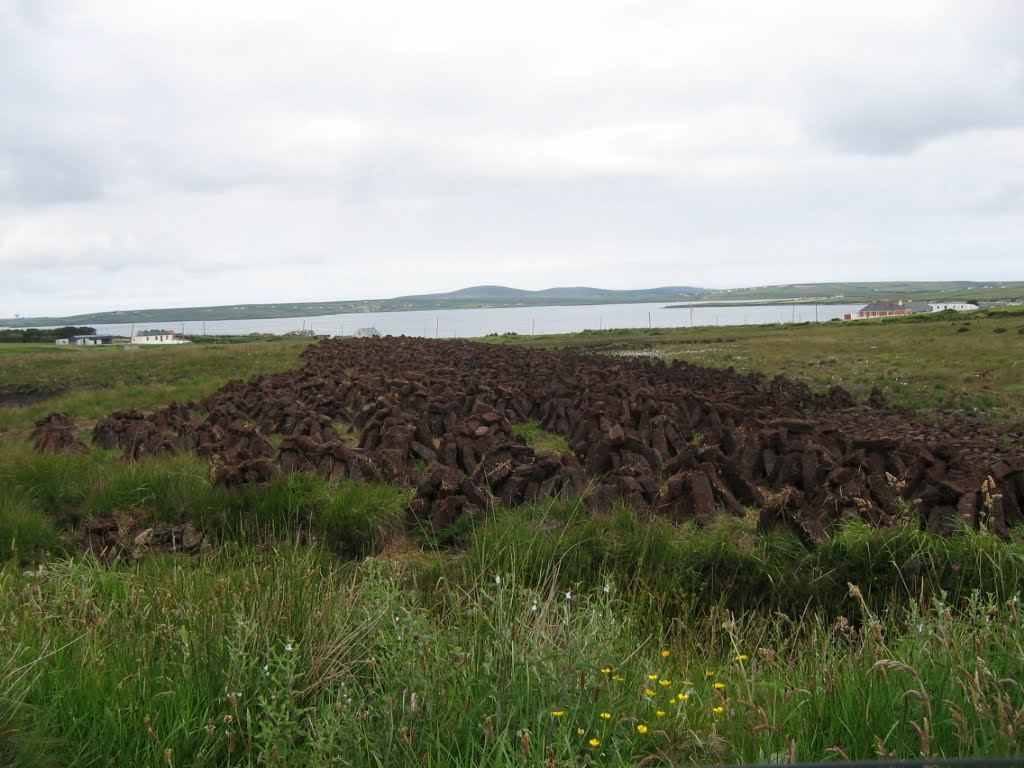
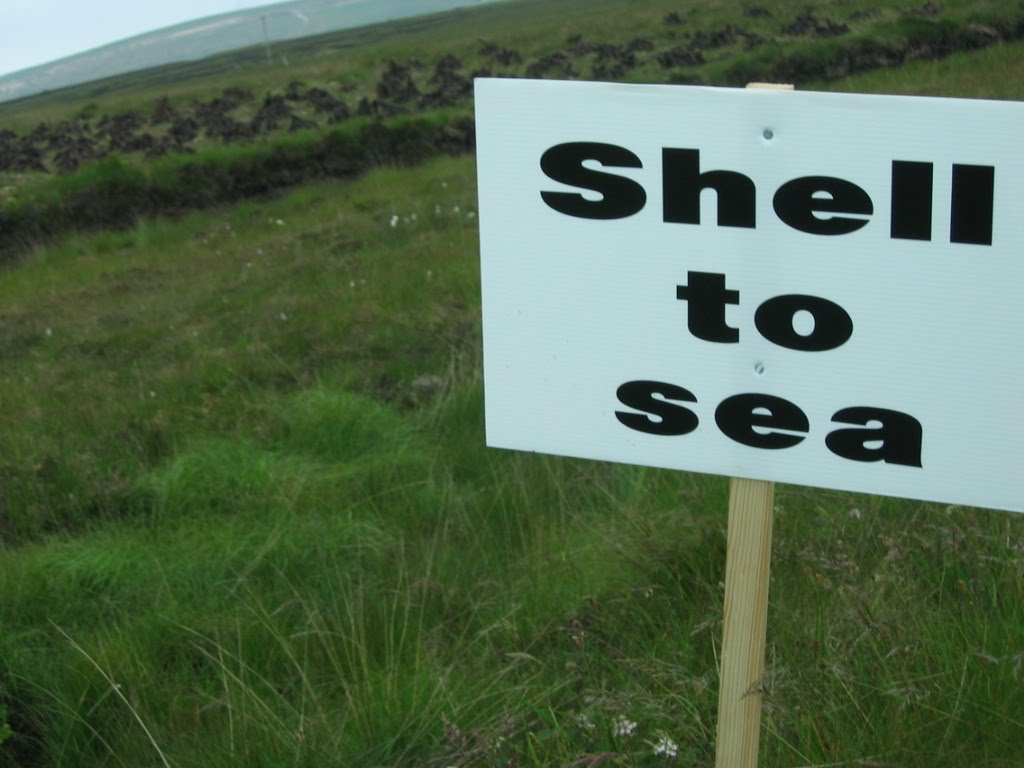
Cut Turf Drying on a Bog
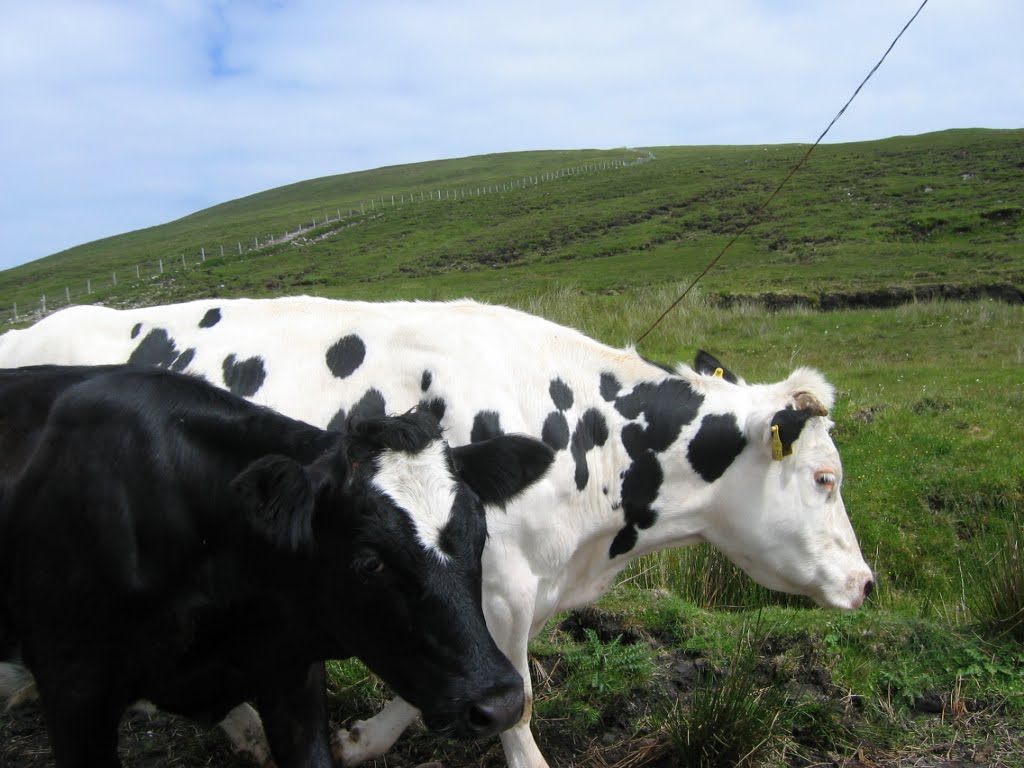
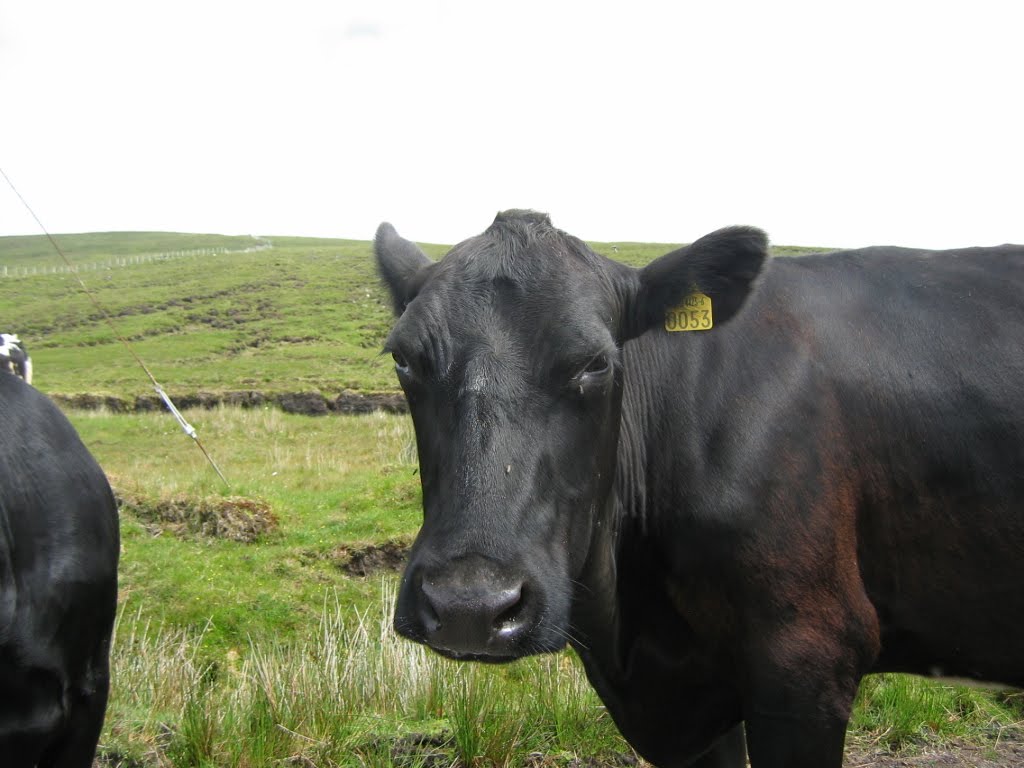
My husband and I decided to visit the Mayo bogs. We passed through some scenic country, the Atlantic Ocean to our left, the Nephin Mountains to our right. The bogs might have been rolling meadows, but the blankets of green weren’t grass. They were scraw, the layer of tough fibrous sod that covered the peat, or turf, as it’s called in Ireland. Masses of white bog cotton and yellow buttercups painted the scraw. Cows and sheep roamed everywhere.

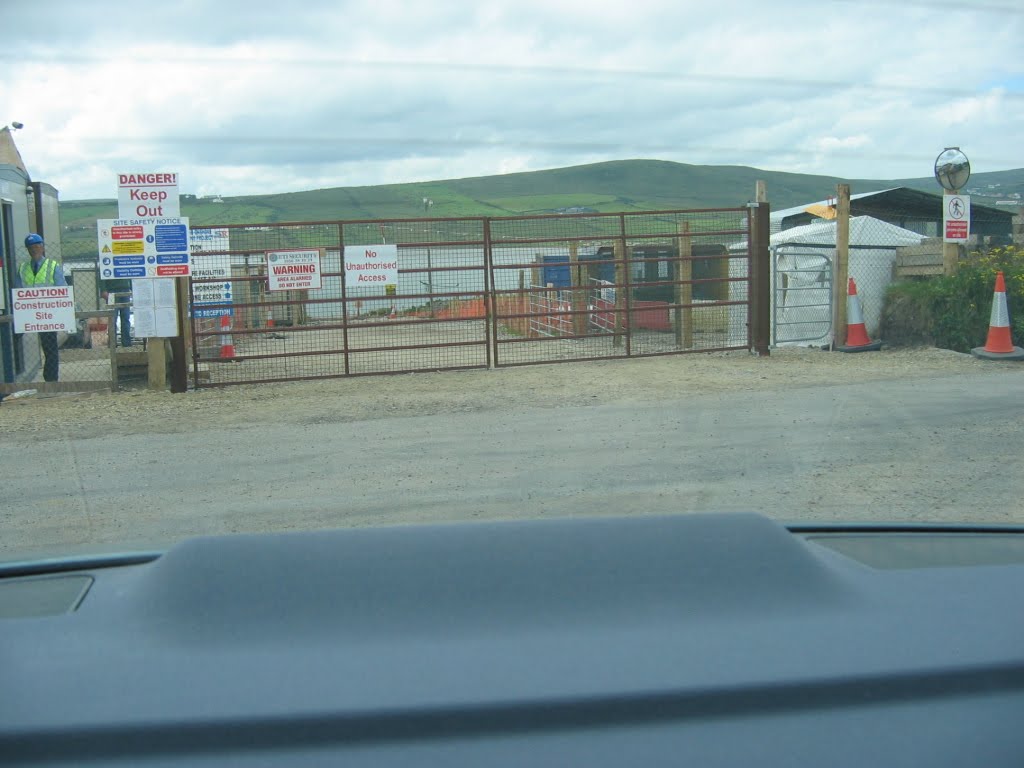
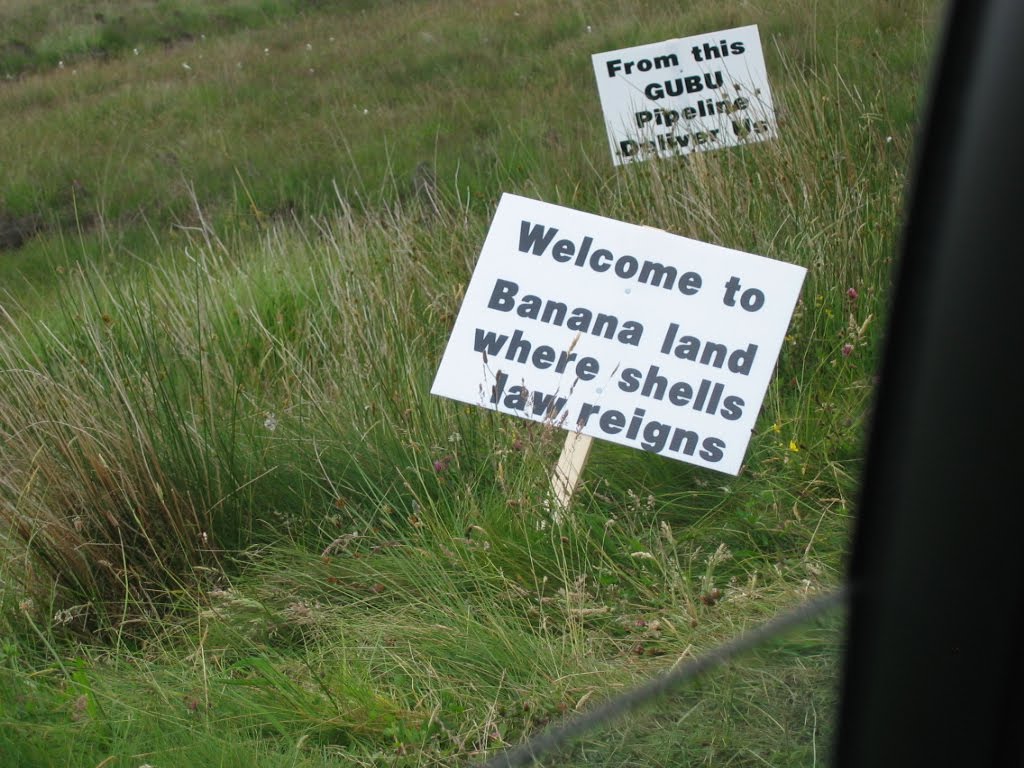
We soon saw men in hard hats working behind a chain link fence, large sections of blue pipe awaiting installation, and protesters sitting in parked cars. Surrounding them were hand-painted signs that said things like, "We are Irish citizens, not Shell subjects."

The next morning, we learned that Royal Dutch Shell had sought and obtained a court order for the arrest of five Mayo men who refused the company access to their land. The men spent ninety-four days in prison.

As I worked on Fiery Roses, a story filled with fictitious villains and heroes, I followed the Irish news, waiting for some resolution to the increasing hostility in north Mayo. I spent three years writing the book and tidying up all the imaginary plot twists. Sadly, the real situation in north Mayo remains unresolved.
* * * * *
EXCERPT from Fiery Roses - A Little Lost:
From his window seat in one of Casa Verro’s largest guest suites, Neil opened the shutters and caught the scent of the sea. Beneath him, a patchwork of planted fields and pastures stretched for mile after emerald mile. Yet the realization that the land sat on a waking volcano spoiled the idyllic scene. That and knowing the verdant panorama wasn’t Ireland.

The air currents shifted. Tantalizing whiffs of roasting pork and baking bread made his mouth water, yet they couldn’t subdue his growing dread that he’d never see Ireland again, never fly again, or zoom off in his Jaguar. His family, his friends, and his precious Talty would all be lost to him if the Peregrine Portal left him behind when it called the others home.

The fervent "Ooh!" behind him was a sound he knew well: Talty had found something to wear to the feast for the Meddiss. Neil turned his head just as Renen raised the top of a shimmering white gown over the pink-tipped breasts that perfectly fit the palms of his hands.

For over an hour, Talty had been trying on the late Danella’s gowns. Renen had come to help. Her shocked gasp when she’d first seen the scars on Talty’s chest had nearly caused Neil to send the woman away. Talty had said nothing, and Renen, a servant unaccustomed to questioning her betters, had recovered well.

"This is lovely, Renen," Talty said.

"It is the finest silk." The fussing servant pinned the shoulder straps with matching broaches.

The dress fell in graceful folds, the cloth so fine it seemed transparent. Gold threads woven through the material shimmered with Talty’s slightest move. The gathered waist flattered her slender form—too slender in her view, it seemed.

"It fits well enough," she said with a downward glance, "but the top is too big."

"Your mamms do look a little lost in there," Neil called from the window.

The women’s heads jerked. As he’d suspected, they’d forgotten he was there.

Talty raised her chin and glared. "You never seem to have any trouble finding them!"

Renen grinned at the playful repartee. "The baroness stretched the dress more, yes, but you, Lady, are well formed and lovely. We will show them. We only have to fix the pins." She gathered the material tighter and reset the broaches.

When she finished, Talty’s eyes widened, silently asking Neil’s opinion.

"You look more grippable now, darlin’." He made squeezing gestures and laughed at her openmouthed gasp. "Really, Tal, you look fine. No goddess could be more beautiful."

"This one can," said Renen. "We will add perfume and jewels, though even the baroness had no rings as fine as yours, Lady."

Talty extended her hand and gazed at the rings Neil had placed there. She smiled lovingly at him as she answered Renen. "I feel strange wearing Danella’s things, but I suppose I have no choice."

"No," Neil muttered. "The airline lost our luggage."

Renen insisted that the baroness would want her things used, not hidden away. "I am so happy to be preparing a lady again. Many times have I whitened the Lady Danella’s cheeks. You need no powder, Lady. Your skin is as white as moonlight. Some kohl for your eyes is all I will add, I think."
* * * * *
About Pat McDermott:
Boston, Massachusetts native Pat McDermott writes romantic action/adventure stories set in an Ireland that might have been. Glancing Through the Glimmer and its sequel, Autumn Glimmer, are young adult paranormal adventures featuring Ireland’s mischievous fairies. Both books are “prequels” to her popular Band of Roses Trilogy: A Band of Roses, Fiery Roses, and Salty Roses. Her first adult contemporary romance, The Rosewood Whistle, was released in June, 2013.
 
Pat is a member of the New Hampshire Writers’ Project, Romance Writers of America, and Celtic Hearts Romance Writers. Her favorite non-writing activities include cooking, hiking, reading, and traveling, especially to Ireland. She lives and writes in New Hampshire, USA.
* * * * *
To Learn More About Pat and Her Books, Visit Her

Monday, February 11, 2013

Talty and Gayth: Before the Battle of Clontarf

An Excerpt from A Band of Roses:
Book One in the Band of Roses Trilogy...

In A Band of Roses, the descendants of High King Brian Boru have ruled Ireland for centuries. Modern day Princess Talty wishes she were anyone but the heir to her father's throne, and she soon learns to be careful what she wishes for. In this excerpt, Talty is visiting ancient Ireland in 1014 A.D. as part of a military mission with her commanding officer, Colonel Richard Gale.

Richard doesn't know that Talty is the King of Ireland's daughter. He knows her as competent Major Christy McKenna. They've met a lady named Leesha whose handsome son, Gayth, has his eye on Talty. Afraid that Talty is a fairy woman planning to steal a husband back to the Otherworld, Leesha tells her son that their lovely young visitor is a holy woman. In this scene, Gayth is leading his Dalcassian clan to join King Brian in his fight against the Vikings, but Gayth has more than warfare on his mind.

EXCERPT:
For three rainy days the Dalcassians rode two hundred strong. They made cold camps and ate what food they carried with them.

The men had balked at bringing a woman along until Gayth described the holy woman’s warrior skills. Still, Talty sensed their disapproving glares. She and Richard kept to themselves.

On the third day, Gayth called a stop to rest and forage for fresh provisions. Talty and Richard tethered their horses and made their separate camp. While Richard prepared a fire pit, Talty rummaged for dry wood beneath the shrubbery.

"Can’t we cheat and use matches, Richard? I’m tired of being cold and wet."

"So am I. Nick is missing a fine old time, isn’t he?" Richard poked through his toolkit until he found the waterproof matchbox. When the fire was burning well, he invited the others to come and light their torches from the holy woman’s fire. The exhausted men came, muttered vague thanks, and returned to the main camp.

At last the rain stopped. Clouds gave way to twilight. Talty and Richard plopped beside their crackling fire and finished the last of their oatcakes and ale.

"So here I am, the protector of a holy woman. Who knew?"

Talty winced. She regretted her participation in Leesha’s deception. Gayth had told the men her presence would protect them. "I wish Leesha hadn’t started this. I’m not some saint who can heal battle wounds with a touch."

"They don’t know that, darling. We have an edge as long as they think you’re no ordinary woman. Why did she say that, anyway?"

"She was afraid I’d spirit Gayth away to fairyland. She needn’t have worried, though. He seems able to resist me just fine."

"Perhaps you married too young to learn how devious men can be. Our friend Gayth isn’t finished with you, holy woman."

Gayth’s reaction to the scars on her chest said otherwise. Talty sighed and set their bags near the fire to dry. She fretted over the leather sack Brother Marcan had entrusted to her.

See that one of the healers gets the bag, Christy. It contains all I could spare from my physic garden and my drying shed.

Marcan had described the contents of the various pouches: yarrow, sorrel, St. Patrick’s leaf, comfrey root, and even fungus dust to keep wounds from festering. Cobwebs to staunch bleeding and prevent inflammation, hare pelts for dressings, linen strips and cobblers’ wax to hold them in place. Jars of honey and salt for infection, bees’ wax and mutton fat for burns.

The clay jars would be fine in the dampest weather. The herbs worried Talty, though when she checked them she found that the leather bag had protected them well.

Gayth stepped from the darkness. Both pleased and annoyed, Talty tied the bag up tight.

"Hello, Gayth," Richard said with an irritating smile. "All’s well, I trust."

"Yes. My kinsmen are grateful for your fire. The furze was too wet to burn. They invite you to join them in a game of spear fishing, Richard. There’s salmon in a nearby stream, and we need the food as well as the sport."

"I’m reluctant to leave Christy alone."

Talty bristled at Richard’s protectiveness. "You should get to know the men. I’ll be safe enough at my prayers."
Gayth’s chocolate eyes sparkled in the firelight. "I will stay and protect you while you pray."

Still smiling, Richard found a spear and went off to fish. Though Talty had encouraged him to go, his abandonment annoyed her. "I’m going to pray beside the pond. It may be a watering hole for game."

"You hunt game, holy woman?"

"Even holy women must eat." She left him by the fire and was soon scanning the ground at the edge of the pond. The phosphorescent twilight revealed animal tracks in the damp soil. She walked toward a dense stand of trees, not quite sorry that Gayth and his sparkling eyes had caught up.

"Did you see any tracks?" he asked.

"Yes. Deer, I think. Smaller game as well, and I’m sure I heard waterfowl a while ago."

"I like roast goose. Can you pray for some?"

She ignored him. "Do we have time to roast meat?"

"The men must eat. Once we’ve rested and filled our sacks with fresh stores of food, we’ll ride again. We should reach Dublin in three, maybe four days’ time."

Talty stopped. "What day is this?"

"Monday of Holy Week. What holy woman wouldn’t know that?"

Again, she ignored him. They could be in Dublin by Good Friday, though that would be cutting it close. Still, the Battle of Clontarf might not take place on Good Friday in this world. Perhaps no battle would happen here at all.
She stole into the trees.

Gayth followed her.

"This will make a fine blind." She spoke more to herself than to Gayth.

"You intend to wait here for deer? Praying?"

Talty returned to the fire and banked the embers.

Gayth was right beside her.

She retrieved the Viking bow and slung the quiver and arrows over her shoulder. Her hooded cloak went on next to protect both her and the bow from the weather.

Her preparations seemed to mystify Gayth. "Why don’t you simply rush the herd and cast a spear when they bolt?"

"This way I’ll get the deer I want, not one who falls behind because it’s old or sick."

"I’ll come with you."

"I need silence."

His smile flustered her. "Yes, I know. To pray. I promise to be quiet."

They stood together in the natural blind and watched the water’s edge. Talty didn’t resist when he pulled her against him.

"Lean on me, lady," he whispered. "Rest a little."

He wrapped his cloak around her. She leaned against him, breathing in damp wool and smoke and sweat, banishing all thought until a small herd of deer appeared to investigate the clearing. Though tempted to forget them, she broke away from Gayth and uncovered her bow. Silence was critical now.

He caught her face in his hands and kissed her well. After the briefest pause, she kissed him back, grateful for the dim light that hid her burning cheeks. Then she nudged him away. The deer wouldn’t tarry long.

Kiyoshi’s words flooded back to her: Don’t try to hit the target with the arrow. See the target as a reflection of your mind, as a mirror. Your mind will find the target.

Gayth stepped back. Talty fixed on the biggest doe in the herd. She drew without breathing, released, and held her position until the arrow pierced the doe’s side.

Shot clean through, the doe hovered over the ground for the briefest moment before collapsing in a motion so natural the other deer failed to notice. The strange whoosh of the arrow had alarmed them, however. They scattered into the forest.

Pleased with her success, Talty lowered her bow. The kiss lingering on her lips unexpectedly angered her. "Why are you here, Gayth? You ran from me before."

"I ran from a holy woman. Your warrior skills bestir most unholy thoughts in me." He ran a knuckle over her breast.

She slapped his hand away. "Help me get the meat back to camp."

She left him smiling in the trees.
* * * * *
A Band of Roses / Available in Print and eBook
Amazon U.S.
Amazon U.K.

Monday, July 23, 2012

Fiery Roses: A Visit to Rossport in North Mayo

Fiery Roses didn’t start as a sequel. Having brought A Band of Roses to a happily-ever-after conclusion several years ago, I envisioned my second book as something different, a story based on the horrors of raging, out of control flames.
I started researching arsonists (a very young firebug started the fire in my family’s home) and brought a preliminary character sketch of a fire-setting villain to my writing class. Meanwhile, I was monitoring the Irish news online, vicariously living in Ireland, the country with which I’d fallen hopelessly in love during my first visit in 2004. I noted rumblings concerning plans to harvest the natural gas discovered in the Corrib Gas Field, a section of the sea fifty miles off the northwest coast of County Mayo, in October 1996.

The arsonist I'd created began to merge with the characters in A Band of Roses. With my imaginary Irish royal family still fresh in my mind, I couldn't help wondering how the indomitable descendants of High King Brian Boru would deal with the political tangle the Corrib gas find had become.

The main problem seemed to stem from the objection of certain Mayo residents to the planned installation of pipelines that would run raw gas from sea to land and across unstable bogs. These people also objected, and still do, to the construction of a refinery to treat the gas ashore rather than at sea. Both sides of the argument have voiced concerns far too complex for the scope of this blog. (For anyone interested in learning more, Shell to Sea has posted a timeline of events on their website, and a history of the Corrib project is available on the website of Ireland's Petroleum Affairs Division.)

My husband and I had planned a trip to Ireland in the summer of 2005, and we decided to visit County Mayo. We spent a week in Cork and continued north (by bus - we weren’t brave enough to drive on the opposite side of the road back then). Late on Sunday afternoon, June 26, we checked into our hotel in the lovely west Mayo town of Westport, three-time winner of Ireland’s Tidy Town award.

The Corrib protests appeared to be centered in Rossport, a remote village on the north Mayo coast. The hotel receptionist said we could reach it by bus, "but you can’t get back the same day." Disappointed but undaunted, we hired a driver named Simon and headed for the bogs.

Early on the morning of Tuesday, June 29, Simon drove us north through the village of Newport, then west through Mulranny. Soon after passing the old hotel overlooking Mulranny Bay, we turned north again. We entered some exquisitely scenic country, the ocean to our left, the Nephin Mountains to our right.

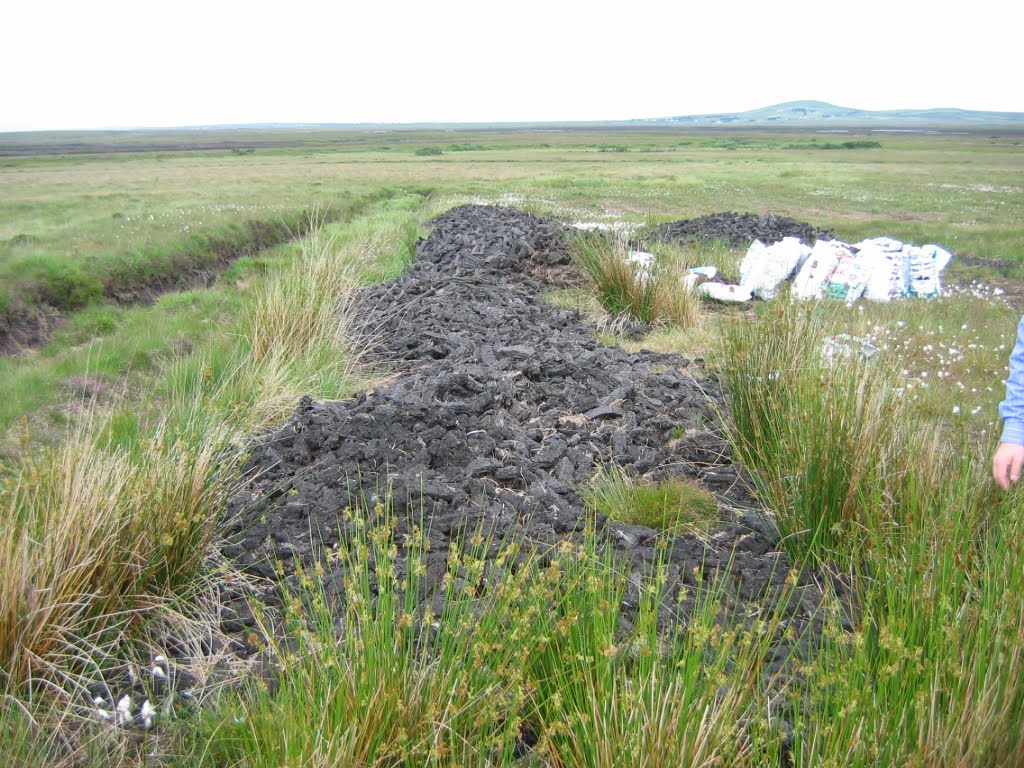
Just past Castlehill, we reached the bogs, which resembled rolling meadows at first glance. Gullies interspersed the expanses of green scraw, the layer of fibrous sod that covered the peat, or turf, as it’s called in Ireland. Cows, sheep, and flocks of blackbirds roamed everywhere, the sheep's wool marked with different colors to show who owned them. Rows of shrubbery divided the bumpy land into square patches. Masses of white bog cotton and yellow buttercups painted the scraw. New homes and crumbling old cottages dotted the landscape. We passed tree farms and quarries and soon saw black squares of turf set in rows to dry. Some of the dark blocks stood in tepee-shaped stooks to let the air flow through and dry them.

Black swaths throughout the bogs marked the sections from which turf had been cut over the years, by hand with a tool called a slean, Simon told us, pronouncing the word shlane. The cuts were obvious, neat vertical banks that looked like tiny dark cliffs topped with the omnipresent scraw. In many places, water filled the bottoms of the cuts.

Simon parked so we could see the turf up close. We stepped over a low barbed wire fence. The ground was spongy, and in some places quite soaked. I lost my balance and tore my jeans on the barbed wire, not one of my most graceful moments.

On we went, continuing north, passing southbound trucks transporting goods from local businesses. Turf cutting machines plowed the bogs for a commercial company in Bangor Erris, where we also passed a limestone quarry. We took a break in Belmullet, a bustling market town situated on a narrow neck of land between Broadhaven Bay and Blacksod Bay. Ancient black cauldrons filled with colorful flowers sat along the sidewalks. Simon struck up a conversation with the ladies who ran the tea shop. They asked where we were going, and when he answered "Rossport," they said we’d better keep our heads down.

From Belmullet we drove east and soon saw a sign for the Corrib Gas Terminal. Men in hard hats were hard at work behind a chain link fence. Down the road, large sections of blue pipe awaited installation.

We turned north at Glenamoy. Sheep and cows wandered everywhere. At one point, we had to stop when a small herd of cows blocked the road. Simon eased through them like a pro.

Before we reached Rossport, we turned onto a road leading to another Shell construction site. Protesters sat in cars along the road. They had pitched a tent and set out hand-painted signs that said things like, "We are Irish citizens, not Shell subjects." We viewed the construction site—trucks, men, and small buildings surrounded by a chain link security fence—and turned around.

The tiny Gaeltacht village of Rossport ran down to the water, presenting a very pretty picture. There wasn't much to the place. A cottage housed the post office. We didn’t see a church, or even a pub. Scattered mountains surrounded the stark but lovely area.
Mission accomplished, we left Rossport behind, passing bogs and goat-infested ruins, traveling east until we reached the steep coastal cliffs overlooking the Atlantic Ocean. We drove by the Céide Fields archaeological site and through the towns of Ballycastle and Killala, at last stopping for a late pub lunch in Ballina. Simon found a bookstore for me, and I picked up two books about the local bogs.

The next morning, Wednesday, June 29, we learned that Royal Dutch Shell had sought and obtained a court order for the arrest of five Rossport area men who refused the company access to their land. The men, who became internationally known as the Rossport Five, spent ninety-four days in prison.

As I worked on Fiery Roses, an imaginary story with fictitious villains and heroes, I followed the Irish news online, waiting for some resolution to the increasing hostility in the Rossport area. Three years later, I finished writing the book after tidying up all the fanciful plot twists with the help of make-believe characters. I filled my tale with action, adventure, and romance, and achieved another happily-ever-after ending. Sadly, the real situation in north Mayo remains unresolved, and I am sorry for the trouble that has come to that quiet, spectacular land.
* * * * *
Fiery Roses is available in print and eBook from Amazon. Read excerpts here.

Sunday, November 7, 2010

Creative Chaos, Celtic Style


French artist Paul Cézanne once said, “We live in a rainbow of chaos.” German scholar Friedrich Nietzsche agreed: “You must have chaos within you to give birth to a dancing star.” If they’re right, I'm well on my way to creative bliss.

One look at the disaster that passes for my office would tell anyone that I've plunged into a new story. Photos of woodland fungi sit atop books about mythology, pirates, and stage lighting. Magazines depicting luxury real estate hide beneath piles of recipes for Monday night writers’ group supper. Homework for Tuesday night writing class litters shelves usually reserved for statues and knickknacks. Dust has invaded said shelves, statues and knickknacks, and beside my printer is a stack of bills I paid days ago but haven’t filed.

This is good. The best artists in my grammar school classes always had the messiest paintboxes. My “paintbox” is messy with books, most of which I obtained during my recent visit to Ireland. I bought so many, the check-in people at Dublin Airport put a “Heavy” tag on my suitcase.

I’ve almost finished reading them and am particularly enjoying a jewel called “Tales of the West of Ireland.” This collection of vignettes, written by County Mayo native James Berry (1842-1914), has it all: murder and smuggling, rebellion and famine, love and betrayal, all drawn from the oral tradition of the people of Mayo and Galway. Berry's stories first appeared in a local newspaper in the 19th century. In the mid 1960s, the late Gertrude Horgan unearthed and published this work in a well-organized and entertaining anthology.

The book begins with an unusual means of winning a local election: kidnap the opposing voters and lock them up overnight with a supply of good whiskey to keep them happy. The whiskey flowed, and the detainees turned their chaotic abduction into a creative evening of storytelling.

I won’t name the book I read right before that. I’ll only say that it, too, is an anthology, newly published and riddled with typographical errors, misinformation, and annoying author intrusion.

Not so the older fella. James Berry’s writing style might be out of vogue, but his stories are charming snapshots of life in a rural Ireland of yore. I get the sense that the storytellers of Berry’s day were not only well-trained in their craft, but also more interested in relaying a story purely for the story's sake rather than in taking personal credit for doing the job. And the language! I’ll be “borrowing” a phrase or two, as this fine old book has “put the come-hither" on me for sure.

Now if I could only find my keyboard . . .

*Rainbow sheep courtesy of Photobucket

Saturday, August 28, 2010

What If?

Some argue that “Alternative History” is more grammatically correct, but “Alternate History” has emerged as the common name for an interesting sub-genre of fantasy fiction. The “what if” asked by so many authors has produced a wealth of thought-provoking tales.

What if the Roman Empire hadn’t fallen? What if the American Revolution had failed? What if Germany had won World War II, or if Russia had reached the moon first?

In The Story of Ireland, published in 1894, historian Standish O’Grady wrote:

The kings of all our European nations came up as the result of an immense amount of fighting between small kings and between powerful families, each of which thought it had the best right to be the Royal Family . . . If Ireland had been left to herself a King of Ireland and a Royal Family of Ireland would have come up in the long run out of those wars, just as out of the wars of the Saxon nations of England the King of the English at last appeared.
What if Ireland had been left to herself?

I wondered about that long before I found Mr. O’Grady’s work in my aunts’ amazing library of Irish books. As a second generation Irish American, I will never know what it is to be truly Irish. My childhood vision of Ireland was one of magical legends and ancient kings, banshees and leprechauns, rebels and outlaw heroes. The first time I saw the real Emerald Isle, the palm trees astonished me—and that wasn’t the only jolt to my flawed concept of modern Ireland.

I longed for the Ireland I knew through song and story. My aunts had assured me our family had descended from Irish royalty, kings and queens long gone but hardly forgotten. How could such great men and women simply vanish?

What if they were still around?
In 1002 A.D., the chieftain of an obscure Irish clan rose to claim the High Kingship of Ireland. Brian Boru united Ireland’s warring tribes under one leader for the first and only time in Irish history. A scholar as well as a warrior, King Brian rebuilt churches, encouraged education, repaired roads and bridges, and roused the country to rise against the Norse invaders who had ravaged Ireland for centuries.

On Good Friday in 1014 A.D., Brian’s army challenged a host of Vikings and their allies on the plains of Clontarf. Though his troops were victorious, Brian’s son and grandson perished in the battle. Brian himself died as he prayed in his tent, murdered by fleeing Vikings who stumbled upon his camp.

Many historians have speculated that Ireland would be a different place today if Brian Boru and his heirs had survived the Battle of Clontarf. A Band of Roses presents one possible scenario.
So begins the preface of A Band of Roses, Fiery Roses, the forthcoming third book, Salty Roses, and my recently completed young adult novel, Glancing Through the Glimmer. In each of these stories, King Brian Boru survived the Battle of Clontarf and founded a dynasty that still rules modern Ireland. Along with a lovable cast of heroes and villains, the Boru clan encounters a blend of adventure, intrigue, and romance one reviewer called “a well-written and fascinating package that will appeal to a wide range of readers.”

Check them out. What if you like them?